

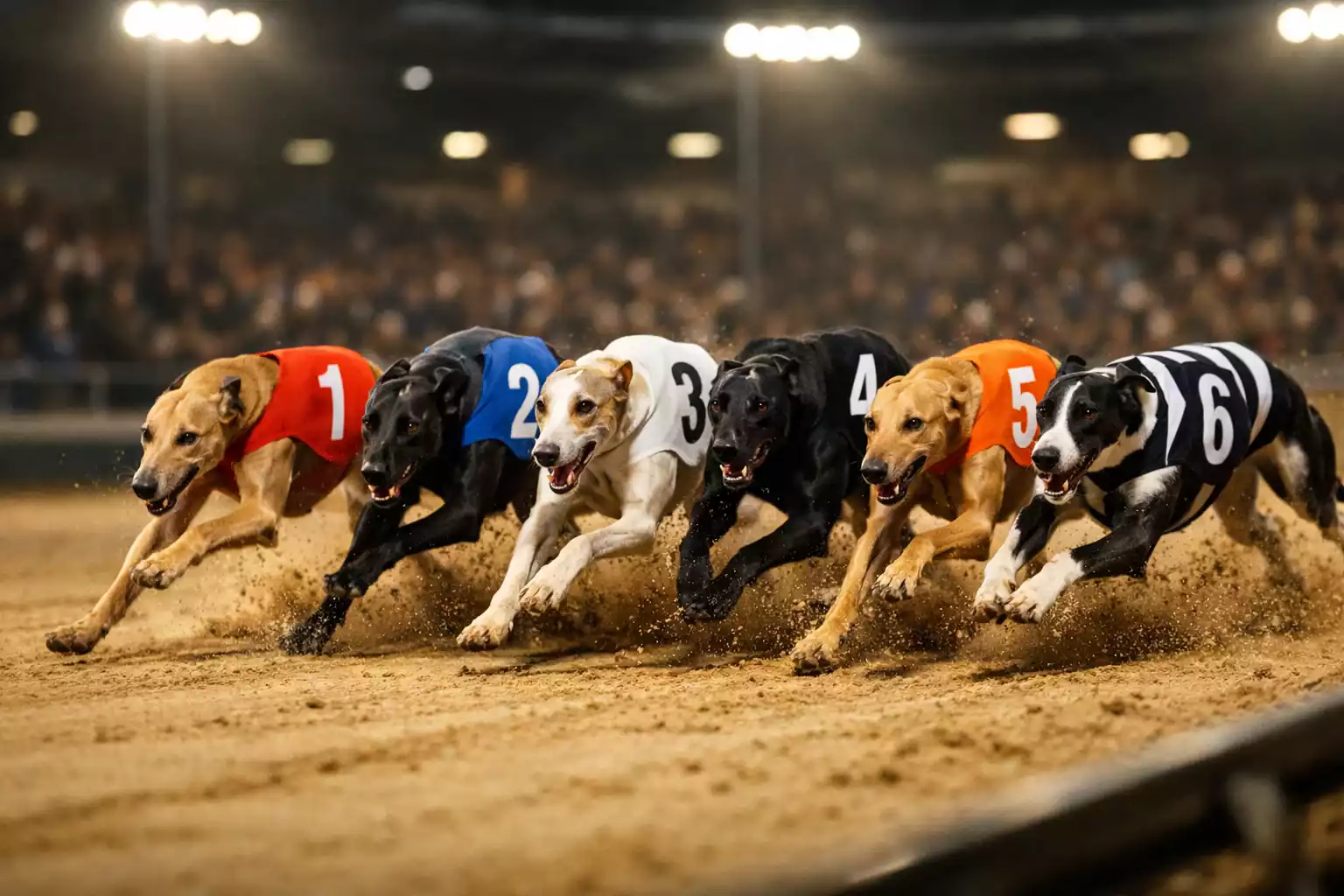
Sheffield Owlerton Stadium stands as one of just 21 licensed greyhound tracks remaining in the United Kingdom, a number that continues to shrink as the industry adapts to shifting economic realities and evolving public attitudes. Yet Sheffield refuses to fade quietly. The track hosts 260 race meetings annually, drawing more than 300,000 visitors through its gates each year. For anyone serious about UK Sheffield dogs results, this is where the data lives.
What separates Owlerton from a casual flutter on the dogs at your local betting shop? Depth. Sheffield offers nine distinct race distances, from the explosive 280-metre sprint to the gruelling 934-metre marathon. Each distance carries its own tactical profile, its own trap bias patterns, its own form indicators that reward the prepared punter and punish the lazy one. The track's 425-metre circumference and 60-metre run to the first bend create a geometry that favours certain running styles over others, turning trap selection into something closer to science than guesswork.
This guide covers everything you need to extract value from Sheffield greyhound results. You will find the official track records that have stood the test of time and the upstarts threatening to break them. You will learn how to decode a racecard until the numbers tell their story without effort. You will understand why certain traps dominate certain distances, and why that matters for your forecast bets. Beyond the data, there is history stretching back to 1932, welfare standards that have improved dramatically in recent years, and a rehoming programme that gives retired racers their second career as family pets. Sheffield is more than a track. It is a living archive of British greyhound racing, and this is your key to reading it.
The Numbers That Define Sheffield Racing
- Sheffield Owlerton runs 260 meetings annually across nine distances, from 280m sprints to 934m marathons, with the 480m track record at 27.27 seconds.
- The 425-metre circumference and 60-metre run to the first bend create trap bias favouring inside boxes on sprint distances.
- UK greyhound welfare metrics hit record lows in 2024: 1.07% injury rate, 0.03% fatality rate, and 94% successful retirement outcomes.
- Forecast and tricast bets offer higher returns but demand accurate multi-position predictions; form analysis and sectional times separate profitable punters from casual bettors.
Sheffield Owlerton at a Glance
Owlerton Stadium occupies a patch of Sheffield's northwestern fringe, wedged between the industrial heritage of the Don Valley and the residential sprawl of Hillsborough. The address is prosaic, the setting unremarkable, but step inside on a Friday evening and the atmosphere shifts. The roar building as six dogs thunder toward the first bend carries an electricity that television coverage cannot quite replicate.
The stadium accommodates 4,000 spectators across its terraced viewing areas, hospitality suites, and trackside restaurants. A 700-space car park handles the crowds on busy nights, though public transport connections via nearby tram stops offer an alternative for those who prefer to leave the car at home. The venue balances its racing purpose with commercial flexibility, hosting everything from corporate events to music nights, but the dogs remain the core business.
Sheffield races on a fixed weekly schedule. Tuesday, Thursday, and Sunday afternoons cater to the daytime betting shop crowd through BAGS meetings, the Bookmakers Afternoon Greyhound Service that pipes live racing into high street shops nationwide. Friday and Saturday evenings shift gear, offering proper trackside experiences where you can feel the sand spray as dogs negotiate the bends. The evening meetings attract a different demographic: couples on date nights, groups celebrating birthdays, families introducing children to a sport that predates Premier League football by a comfortable margin.
BAGS dominates the modern greyhound calendar, and Sheffield leans into this reality. The majority of those 260 annual meetings serve the betting shop audience rather than the trackside punter. This is not a criticism but a statement of economic fact. Bookmaker-funded racing keeps tracks operational when gate receipts alone would fall short. The relationship creates a viewing experience that differs from horse racing's more romanticised model: Sheffield dogs results often matter more to someone watching a screen in Wolverhampton than to someone standing trackside.
Capacity
4,000 spectators with 700 parking spaces
Race Days
Tuesday, Thursday, Sunday afternoons; Friday, Saturday evenings
Meeting Type
Primarily BAGS, with evening cards for trackside attendance
Annual Visitors
More than 300,000 across all meetings
The crowd composition at Owlerton tells its own story. Seasoned punters cluster near the parade ring, scrutinising coat condition and movement. Casual visitors gravitate toward the restaurant, where a decent meal and a flutter go together without demanding deep form knowledge. Serious bettors, laptops open, occupy the tables closest to the monitors showing sectional times. Everyone finds their level, and Sheffield accommodates them all without pretence. The track does not oversell itself as glamorous. It offers honest racing in honest surroundings, and that authenticity has kept the turnstiles clicking for over ninety years.
That authenticity begins with the track itself, a purpose-built circuit whose dimensions shape every race outcome before a single dog leaves the traps.
Track Specifications That Shape Every Race
Every greyhound track carries a fingerprint, a combination of physical dimensions that determines which running styles thrive and which struggle. Sheffield's fingerprint starts with a 425-metre circumference, placing it squarely in the mid-sized category among UK venues. This is neither the tight confines of a 380-metre circuit nor the sweeping expanse of a 460-metre oval. It occupies a middle ground that rewards balanced dogs over pure specialists.
The run to the first bend measures between 60.5 and 62 metres depending on the starting distance. That measurement matters more than casual observers might expect. A shorter run compresses the field, increasing collision risk and amplifying the advantage of fast-starting dogs. A longer run allows the pack to spread, reducing interference and giving mid-race pace a chance to tell. Sheffield's run sits on the shorter side of the UK average, which explains why trap statistics here show a modest inside bias on sprint distances where early positioning proves decisive.
The hare system employs an Outside Swaffham configuration, meaning the mechanical lure travels around the outer rail. Dogs naturally gravitate toward the hare, so an outside lure tends to pull the field slightly wide through bends. This subtly benefits runners comfortable taking a wider path, though the effect should not be overstated. Strong railers still win plenty at Sheffield; they simply need to commit early rather than drift.
Sheffield's sand track surface drains efficiently, minimising weather cancellations compared to grass courses. However, track condition still varies: firmer going suits front-runners, while rain-softened sand can aid dogs with stamina.
The surface itself is sand rather than grass, a characteristic shared by most modern UK tracks. Sand offers consistency that grass cannot match; it does not cut up through a meeting, and it drains faster after rain. Sheffield rarely loses meetings to weather, unlike some of the remaining grass tracks in Ireland. The trade-off is a slightly slower surface than well-maintained turf, though this difference only matters when comparing times across venues rather than analysing form within Sheffield's own results.
Two bends, four straights, and a geometry that punishes dogs slow out of traps: that is Sheffield at its technical core. Every time analysis you run, every trap trend you follow, should begin with this physical reality. The numbers do not exist in a vacuum. They emerge from the interaction between canine athletes and this specific 425-metre loop of sand.
Those 425 metres can be divided in nine different ways, each distance creating a fundamentally different race.
Nine Distances: From Sprints to Marathons
Sheffield offers nine standard race distances, each demanding different qualities from the competitors. Understanding these distances is fundamental to reading Sheffield greyhound results with any sophistication. A dog's form over 280 metres tells you almost nothing about its likely performance over 720 metres. The distances are not interchangeable laps around the same circuit; they are distinct disciplines requiring distinct analysis.
The 280-metre dash represents pure speed distilled to its essence. Dogs break from traps, negotiate a single bend, and cross the finish before stamina becomes a factor. Races last under sixteen seconds, leaving no time for positional recovery. If your dog misses the break or gets squeezed at the first bend, the race is effectively over. Trap position dominates here; form matters less when the entire contest hinges on fifteen metres of running room.
At 362 metres, the track's shortest standard distance, early pace still determines outcomes, but the extra ground allows some margin for error. A slow starter can recover with a strong finish, though the window is narrow. This distance rarely features in open competitions and primarily serves graded racing where dogs of similar ability compete.
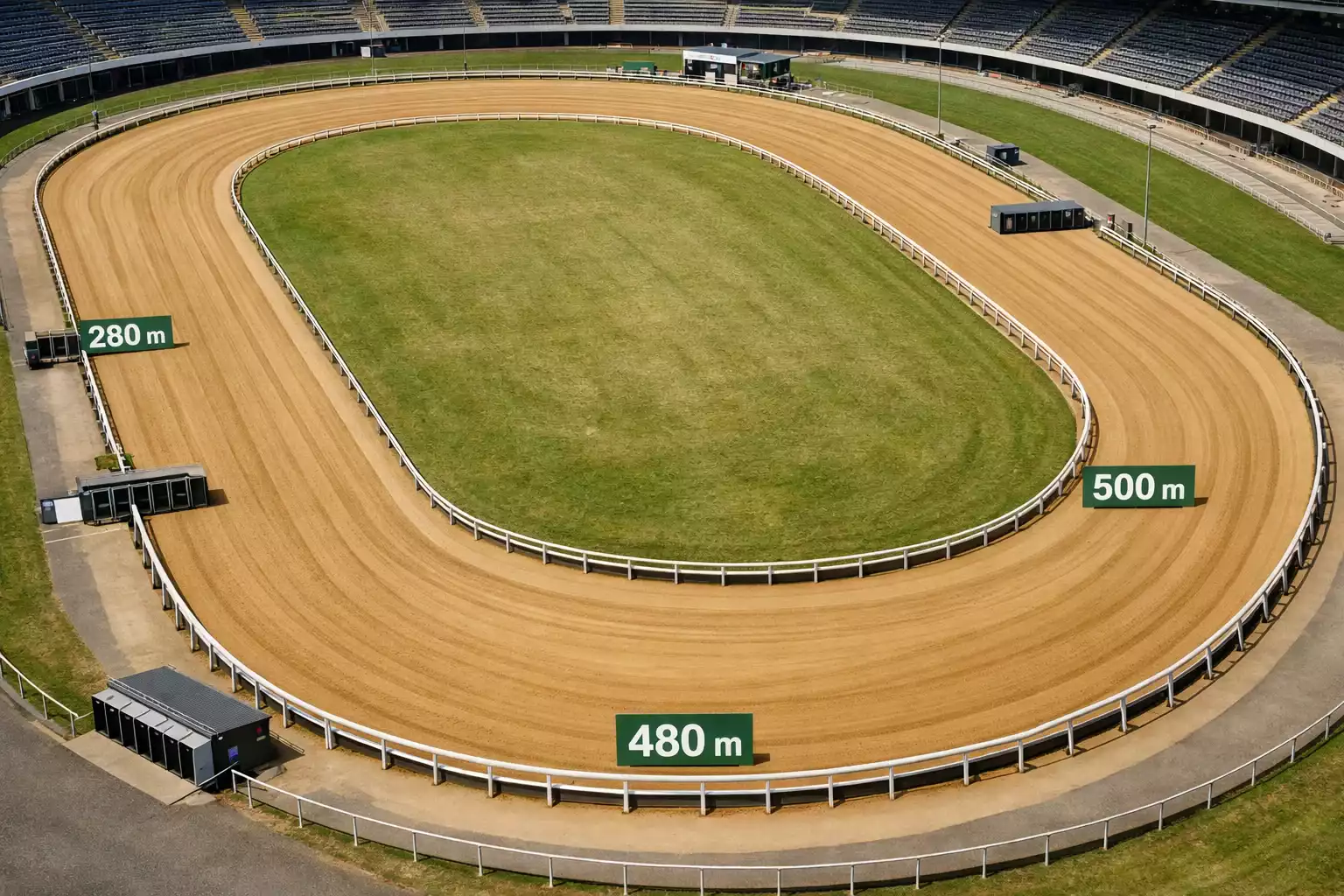
The 480-metre and 500-metre trips constitute Sheffield's bread-and-butter racing. Most graded meetings lean heavily on these distances, which balance speed and stamina in roughly equal measure. The extra bend introduces tactical complexity: dogs can challenge for position through the middle of the race rather than simply holding whatever spot they claimed at the first turn. Form analysis matters more here than on shorter distances.
Sheffield also runs a 500-metre hurdle race, where dogs clear four low obstacles during the circuit. Hurdle racing adds a skill dimension beyond flat performance. Some dogs jump cleanly and maintain rhythm; others stumble, lose momentum, or refuse altogether. Past hurdle form is the best predictor of future hurdle performance, and specialists rarely excel on both codes.
The 660-metre and 720-metre trips shift the emphasis toward stamina. Front-runners must prove they can sustain pace around multiple bends, while closers get additional ground to mount their challenge. These distances reward dogs with proven endurance and punish those who fade. Weight becomes more significant; a slightly heavier dog may lack the finishing kick required over an extra hundred metres.
Finally, the marathon distances of 915 metres and 934 metres represent greyhound racing's equivalent of middle-distance running. Races unfold over nearly a minute, long enough for lead changes, for tired dogs to fall back, for patient closers to time their challenge. Stamina trumps raw speed, and repeat performers dominate the form book. If a dog has won multiple marathons at Sheffield, trust that evidence over any single impressive sprint time.
The schedule distributes races unevenly across these distances. Standard trips dominate most meetings, with sprints and marathons appearing less frequently. Knowing which distances feature on a given card helps focus your preparation and prevents wasting time analysing dogs who are not running.
Track Records: Sheffield's Fastest Ever
Track records serve as benchmarks against which all other performances are measured. At Sheffield, the official record book captures the fastest time ever recorded over each standard distance, providing context for everyday graded racing. When you see a dog post a time within half a second of the track record, you are watching something special.
One name appears twice on Sheffield's roll of honour. Roxholme Magic holds records at both 480 metres and 934 metres, an unusual double that speaks to exceptional versatility. The 934-metre record of 56.28 seconds came first, set on 26 April 2016, establishing Roxholme Magic as a stamina specialist. Four years later, on 15 September 2020, the same dog returned to claim the 480-metre record at 27.27 seconds, proving that class transcends distance categories. Finding a dog capable of excelling at both ends of the spectrum remains rare; Roxholme Magic managed exactly that.
Interactive Tool
Implied Flat 500m Record, and Visitors Per Meeting
Work out the actual flat 500m record from the hurdle-race gap the guide gives, and calculate how many visitors each Owlerton meeting really draws.
Implied Flat 500m Record
-
-
Hurdle Record
-
Stated Gap
-
Track Record
-
What this guide states as a gap without the number: "The hurdle record of 28.96 seconds by Razldazl Raidio stands only 0.69 seconds slower than the flat 500-metre record." The flat record itself is never stated directly — it works out to 28.27 seconds.
Average Visitors Per Meeting
-
-
Annual Visitors
-
Annual Meetings
-
% of Capacity
-
What this guide gives as two separate figures: "The track hosts 260 race meetings annually, drawing more than 300,000 visitors through its gates each year." The average per meeting is never calculated — it's roughly 1,154 visitors, just 28.9% of the stated 4,000-seat capacity.
The 362-metre record deserves special mention for its longevity. Farloe Bubble's 20.82-second run dates back to October 1997, making it the oldest standing record at Sheffield. Nearly three decades without a faster time suggests either an exceptional performance or a distance that rarely attracts top-class sprinters to break it. The sprint records tend to fall more frequently because small improvements in trap technology, training methods, or simply generational talent can shave hundredths of a second that add up.
The hurdle record of 28.96 seconds by Razldazl Raidio stands only 0.69 seconds slower than the flat 500-metre record, demonstrating how cleanly top hurdlers clear their obstacles without losing significant momentum.
Comparing a dog's time against these records provides perspective, but context matters. Records fall on fast tracks, favourable going, and ideal conditions. A 28.50 over 500 metres on a rain-softened track might represent a more impressive performance than a 28.10 on perfect going. Use the records as a ceiling, not a universal standard. The dogs who approach them deserve attention; the ones who break them earn a permanent place in Sheffield's history.
Trap Statistics: Which Box Wins?
Trap statistics divide greyhound punters into believers and sceptics. The believers treat trap bias as gospel, backing inside boxes on sprint races with religious conviction. The sceptics dismiss it as noise, arguing that individual dog quality swamps any positional advantage. The truth, as usual, lies somewhere between these poles, and Sheffield's numbers offer instructive data for both camps.
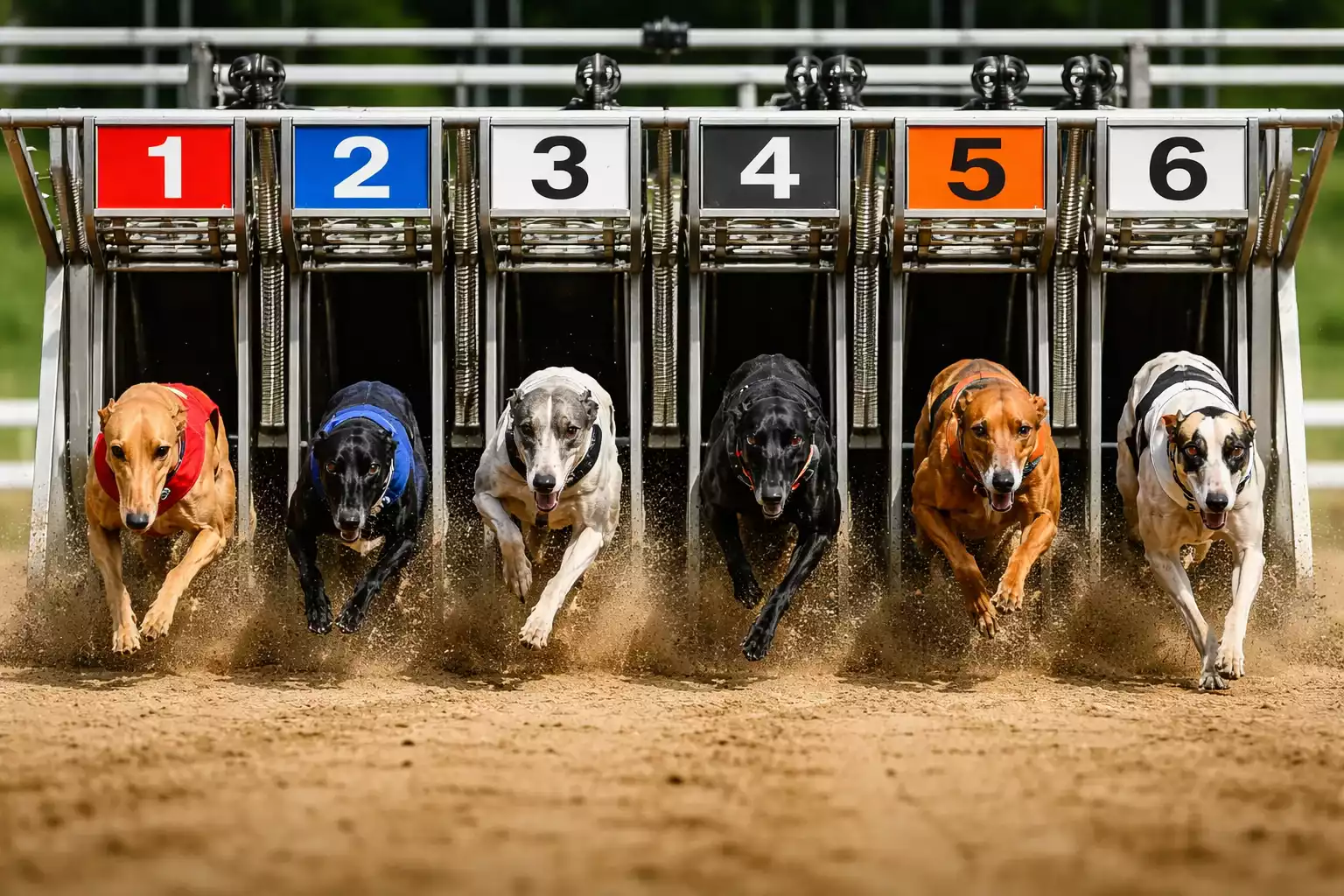
The six starting traps carry distinctive colours: red for trap one, blue for trap two, white for trap three, black for trap four, orange for trap five, and black-and-white stripes for trap six. These colours matter because they allow instant identification of dogs through binoculars or screens, but they also create psychological associations. Regular punters develop trap preferences based on perceived patterns that may or may not reflect statistical reality.
At Sheffield, trap one holds a modest advantage across all distances combined. The run to the first bend measures between 60.5 and 62 metres, shorter than many UK tracks, which compresses the field and creates congestion. The inside dog avoids trouble by hugging the rail, while middle and outside dogs must navigate traffic. This geometry translates into a few percentage points of additional win rate for trap one, though the edge is smaller than many punters assume.
Sprint distances amplify the trap bias. On 280-metre races, the inside traps show a pronounced advantage because the single bend leaves minimal time for positional recovery. A dog breaking well from trap one or two can establish a clear run and defend the rail without interference. By contrast, trap six must cover extra ground around the bend, losing valuable lengths that cannot be recovered on such a short trip. Sprint betting at Sheffield should always factor in trap position as a primary variable.
Standard distances of 480 and 500 metres present a more balanced picture. The additional running time allows form to assert itself over starting position. A genuinely superior dog can overcome an outside draw by outpacing the field through the middle stages. Trap statistics still show a slight inside lean, but the margin shrinks to the point where other factors, especially recent form and sectional times, carry greater predictive weight.
On staying trips of 660 metres and beyond, trap position matters least. These races unfold over enough ground that early positioning gives way to stamina and tactical racing. A trap-six dog can afford to settle behind the early pace and challenge later. The numbers bear this out: marathon distances at Sheffield show nearly equal win rates across all traps, suggesting that quality rather than draw determines outcomes.
Weight trap statistics appropriately: heavily on sprints, moderately on standard distances, lightly on marathon trips. Ignoring trap draw on 280-metre races is a mistake; obsessing over it on 720-metre races is equally misguided.
Running styles intersect with trap draw in ways that complicate simple analysis. A natural railer drawn in trap one enjoys a double advantage: positional and stylistic. The same railer drawn in trap six faces a longer path to the rail and increased collision risk. Wide runners, conversely, cope better with outside draws because their natural path avoids the bunching that occurs along the inside line. Before dismissing a trap-six dog, check its running style. If it swings wide naturally, the outside draw may be neutral rather than negative.
How to Read a Sheffield Racecard
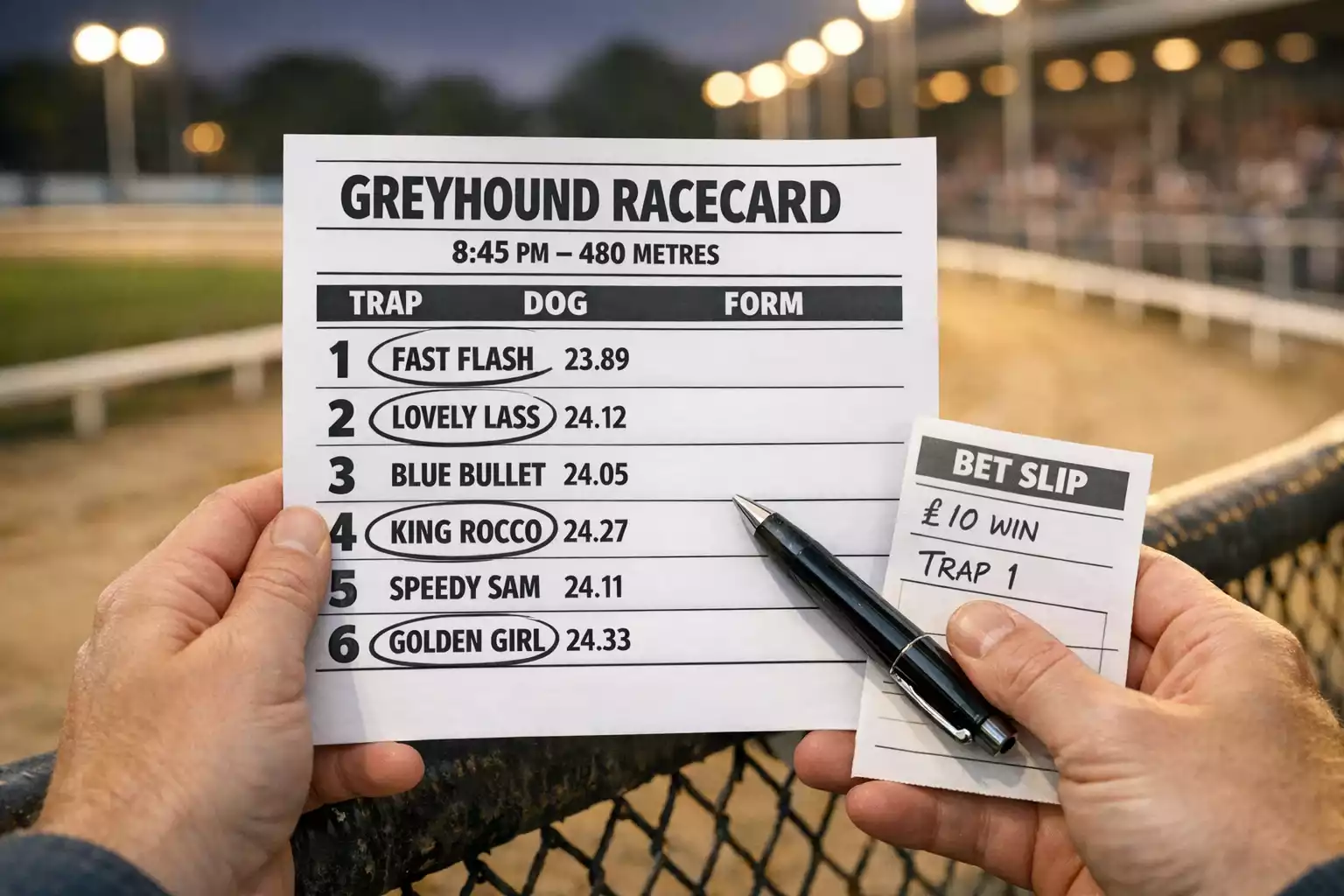
The racecard is where analysis begins and bets are born. A Sheffield racecard contains everything you need to evaluate the six dogs in a race, but only if you understand what each element means. The numbers and abbreviations can seem impenetrable at first glance, yet they follow consistent conventions that unlock quickly once explained.
Each entry on the racecard starts with the trap number and corresponding colour. Trap one is always red, trap two blue, trap three white, trap four black, trap five orange, and trap six striped. The dog's name follows, along with its colour, sex, and date of birth. Sex matters because bitches coming into season may be withdrawn, and some punters believe dogs perform differently against bitches. Age matters because greyhounds peak between two and four years old, with performance typically declining after five.
The trainer's name appears alongside the dog's details. Trainers develop reputations for specialties: some excel with sprinters, others with stayers, some with first-time-out runners. Following trainer form can supplement dog form, particularly when a kennel hits a purple patch and sends out winner after winner. Sheffield regulars learn which trainers to trust and which to view with caution.
Form figures constitute the most scrutinised section of any racecard. A sequence like 231542 represents the dog's finishing positions in its last six races, read left to right from most recent to oldest. The number one means a win, two means second place, and so on down to six for last place. A zero indicates the dog failed to finish or was disqualified. Letters replace numbers for special circumstances: M for mid-division in trials, T for trial runs that do not count as competitive races.
Reading Form: 213156
Most recent race: 2nd place. Previous: 1st (win). Before that: 3rd. Fourth back: 1st. Fifth: 5th. Sixth: 6th.
This dog shows improving form with recent places after earlier struggles. The two wins suggest ability; the recent second indicates current competitiveness.
Best time records the fastest the dog has ever run over the day's race distance. This number offers a ceiling of potential but should not be confused with current ability. A best time set two years ago on fast going may not reflect today's form. Compare it against recent times to assess whether the dog is approaching peak, declining, or simply inconsistent.
Sectional times, where available, break the race into segments. The time to the first bend reveals early pace: a fast section suggests a front-runner who leads from trap. A slow section with a fast finish indicates a closer who accelerates late. Matching sectional profiles to trap draw can identify dogs likely to avoid trouble by being ahead or behind the pack.
Remarks codes appear in abbreviated form and describe in-running incidents from previous races. Crd means crowded, indicating the dog was boxed in by rivals. Bmp means bumped, suggesting contact during the race. Ck means checked, where the dog slowed to avoid trouble. SAw means slow away, indicating a poor break from traps. QAw means quick away, the opposite. Led means the dog led at some point. Rls means rails run, and Wide indicates the dog raced toward the outside.
Weight appears in kilograms and tracks changes from race to race. A significant weight drop might indicate illness or poor conditioning; a significant gain might suggest muscle growth or over-feeding. Most dogs race within a consistent band, and deviations warrant attention. The optimal weight varies by distance: sprinters tend to carry less bulk than stayers.
Finally, the grade tells you the quality of competition. Open races attract the best dogs regardless of grade, while graded races restrict entry to dogs of similar proven ability. An A1 race features top-class performers; an A8 race features dogs near the bottom of the graded ladder. Comparing grades helps contextualise form: a win against A5 opposition means less than a win against A2 rivals.
Betting Fundamentals for Owlerton
Greyhound racing sustains a betting market worth approximately £1.81 billion annually across the United Kingdom, placing it among the nation's major gambling sectors. Sheffield contributes its share to that turnover through BAGS meetings that beam directly into betting shops and through tote pools offered to trackside punters. Understanding the betting options available helps you deploy your stake effectively.
The win bet represents the simplest wager: pick the dog you believe will finish first, and collect if it does. Odds are expressed in fractional format by default in the UK, though decimal odds appear on exchanges and some online bookmakers. At 5/1, a winning ten-pound bet returns sixty pounds including your stake. At 2/1, the same bet returns thirty pounds. The favourite starts the race with the shortest odds, indicating the market considers it most likely to win, though favourites lose more often than novice punters expect.
Place betting adds a margin of safety. Your dog must finish in the first two to collect, but the odds are reduced, typically to one quarter of the win price. Place betting suits dogs you believe will run well without guaranteeing victory, perhaps a consistent performer drawn awkwardly who might get beaten but will stay competitive. Sheffield's six-runner fields mean place bets cover two positions; larger fields at other venues sometimes extend to three.
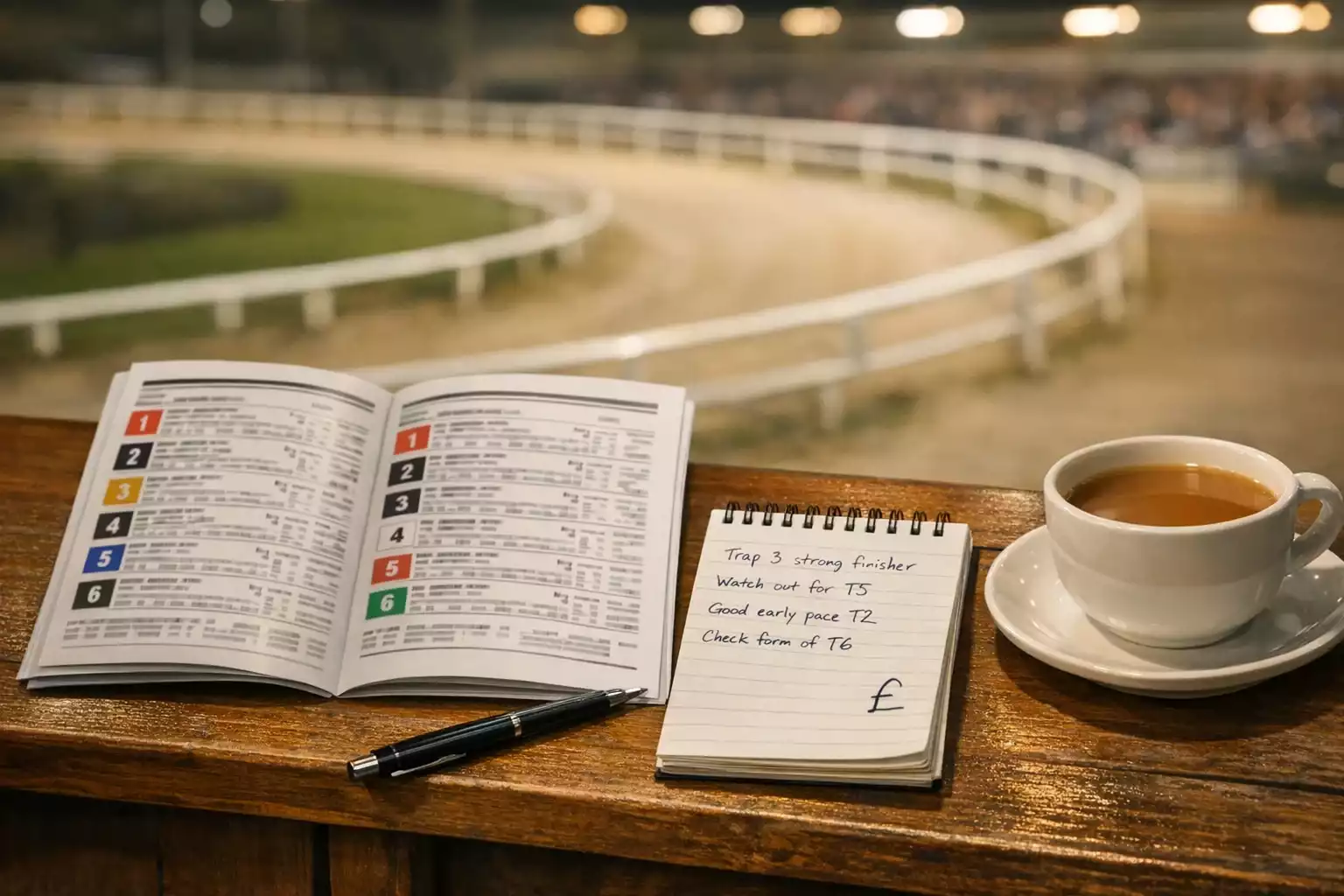
Each-way betting combines win and place stakes into a single wager. Half your stake goes on the dog to win, half on the dog to place. If it wins, both bets pay out. If it places without winning, you collect on the place portion only. Each-way betting offers a middle path between aggressive win-only punting and conservative place backing, though the mathematics only favour it at certain price points. Dogs below 4/1 rarely justify each-way stakes because the place return becomes negligible.
Forecast betting predicts the first two finishers in correct order. A straight forecast names dog A to win and dog B to finish second. A reverse forecast covers both possible orders: A-B or B-A. Combination forecasts extend to multiple selections, covering every permutation of your chosen dogs across first and second. Forecast payouts can be substantial when outsiders fill the places, but the difficulty of predicting two positions makes this a bet for confident punters.
Tricast betting pushes the challenge further, requiring you to name the first three finishers in exact order. The payouts balloon accordingly, sometimes reaching hundreds of times your stake when longshots fill the frame. Tricast betting at Sheffield suits races where form offers clear separation between the leading contenders and the also-rans, allowing you to narrow the first-three pool to manageable combinations.
Best Odds Guaranteed, commonly abbreviated to BOG, ensures you receive whichever price proves higher: the odds you took when placing the bet or the starting price at the time the race begins. Most major bookmakers offer BOG on greyhound racing, including Sheffield fixtures, though terms vary and some operators exclude certain meeting types. Check the specific BOG policy before assuming it applies to your bet.
Tote pools aggregate all stakes into a shared fund, with winning bets sharing the pool minus a percentage retained by the operator. Tote returns appear after the race rather than before, so you cannot know your exact payout until the result is confirmed. Pool betting suits punters who believe they can beat the crowd's collective wisdom; fixed-odds betting suits those who prefer certainty.
Form Analysis: Reading Between the Lines
Form figures tell a story, but like any story, they require interpretation. A sequence of 111111 looks impressive until you discover those wins came against weak opposition at a lower grade. A sequence of 654432 looks poor until you realise each race was at open class against the best dogs in the region. Form analysis means understanding context as much as counting numbers.
Recent form carries more weight than historical form. A dog's last three races matter more than its last ten, and its last race matters most of all. Greyhounds can improve or decline rapidly, and form from three months ago may reflect a different animal than the one entering traps tonight. Focus your attention on the freshest data, using older runs primarily to establish patterns rather than predict outcomes.
Sectional times reveal what finishing positions obscure. A dog that finished fourth but posted the fastest final sectional was closing rapidly at the line. That dog may have been unlucky to miss the places or simply ran into trouble. Conversely, a dog that finished second but posted the slowest final sectional was fading and might have been caught with another stride. Sectionals separate dogs that earned their positions from dogs that inherited them.
The going allowance adjusts times to account for track conditions. A fast track produces faster times; a slow track produces slower times. Calculated times apply a standard adjustment to neutralise these conditions, allowing comparison across different days. If a dog ran 28.50 actual but 28.30 calculated, the going was slower than standard, and the performance was better than the raw time suggests. Sheffield publishes going reports for each meeting, though not all data sources incorporate the adjustment automatically.
The best form indicators at Sheffield combine finishing position, sectional times, calculated adjustments, and remarks codes into a single coherent picture. No single data point tells the whole story.
Patterns of improvement or decline often predict better than absolute numbers. A dog showing 564321 is trending upward with three consecutive improvements. That trajectory suggests continued progress, particularly if the most recent runs came at the current grade. A dog showing 123654 is trending downward despite early success. Something has changed, perhaps age, injury, or simply a loss of form that has no obvious explanation. Trends extrapolate more reliably than snapshots.
Remarks codes contextualise poor finishes. A sixth-place finish accompanied by Crd, Bmp, and Ck tells a different story than a sixth-place finish with no remarks. The troubled dog encountered interference that compromised its run; the clean-run dog simply was not good enough. When handicapping Sheffield races, forgive interference once or twice, but recognise that some dogs consistently find trouble because their running style attracts it.
Finally, class drops and rises reshape expectations. A dog dropping from A1 to A3 grade faces easier opposition and should perform better by simple logic. A dog rising from A5 to A3 faces tougher rivals and may struggle even if its recent form looks solid. Watch for class movements when evaluating form; they explain apparent inconsistencies that baffle punters who ignore them.
This depth of analysis exists because Owlerton has cultivated serious racing for nearly a century, building the infrastructure and expertise that separates a proper track from a novelty attraction.
Sheffield Through the Decades
Owlerton Stadium opened its gates in 1929, though greyhounds were not the original attraction. Speedway motorcycles carved the first laps around the cinder track, bringing noise, exhaust fumes, and crowds to a venue purpose-built for mechanical spectacle. The greyhounds arrived three years later, on 12 January 1932, when 10,000 spectators crammed into the stadium to witness the first races. That attendance figure exceeded initial projections and signalled that Sheffield had appetite for the dogs.
The inter-war years established Owlerton as a fixture in British greyhound racing. The sport had exploded following its introduction at Belle Vue in 1926, spreading across industrial cities where working-class audiences embraced betting, spectacle, and an evening's entertainment at accessible prices. Sheffield competed with nearby tracks at Leeds and Doncaster for regional dominance, holding its own through quality racing and consistent management.
Wartime interrupted normal service, as it did everywhere, but Owlerton resumed operations quickly after 1945. The post-war decades represented a golden age for greyhound racing nationally. Crowds packed stadiums across the country, betting turnover soared, and tracks invested in facilities that reflected their cultural importance. Sheffield staged prestigious competitions including heats of the News of the World Championship in 1951, adding national profile to regional reputation.
The Steel City Cup emerged as Sheffield's signature event, a competition that attracted top dogs from across the UK and provided the calendar highlight for local enthusiasts. The trophy carried prestige beyond prize money, with trainers and owners coveting a Steel City title as validation of quality. The cup's history interweaves with Sheffield's broader story, reflecting the track's ability to attract talent and stage racing at the highest level.
Owlerton briefly hosted stock car racing alongside greyhounds, part of a diversification strategy that brought different audiences to the stadium. The dogs outlasted the cars, though both shared the oval during the sport's most experimental phase.
Decline arrived gradually rather than dramatically. Television competed for attention, other entertainment options multiplied, and attendances slipped across all tracks. Sheffield fared better than many rivals because it adapted: upgrading facilities, embracing BAGS coverage, and maintaining an evening race programme that kept community connections alive. Other stadiums closed entirely during the consolidation that reduced UK licensed tracks from over seventy to the current twenty-one.
The March 2026 landscape positions Sheffield as a survivor in a shrinking industry. The stadium has operated continuously for over ninety years, outlasting venues that seemed equally permanent. Recent years have brought regulatory scrutiny and economic pressures that test every remaining track. Sheffield meets these challenges while hosting those 260 annual meetings, proving that reports of greyhound racing's death remain premature.
History matters because it establishes context. When you study Sheffield dogs results, you are engaging with a tradition stretching back to crowds watching races under pre-war floodlights. The sport has changed, the dogs have changed, the betting landscape has transformed unrecognisably, but the fundamental contest, six dogs chasing a mechanical hare around a sand oval, remains exactly what those 10,000 spectators witnessed in January 1932. What has changed most dramatically is the attention paid to animal welfare.
Welfare Standards in UK Racing
Greyhound welfare has dominated public discussion of the sport in recent years, and the numbers published by the Greyhound Board of Great Britain provide the clearest picture of current standards. The injury rate across UK licensed tracks stood at 1.07% of total races in 2024, a record low that represents sustained improvement over the previous decade. The fatality rate fell to 0.03%, down from 0.06% in 2020, meaning track deaths have halved in five years.
These statistics emerge from a regulatory framework that has tightened considerably since 2018. That year marked the launch of the Greyhound Commitment, a welfare strategy that introduced mandatory standards, increased transparency, and created financial mechanisms to ensure retired dogs receive proper care. The transformation has been measurable: economic euthanasia, the practice of putting healthy dogs down because owners could not afford to keep them, has declined by 98%. In 2018, 175 greyhounds were destroyed for economic reasons across UK racing. In 2024, that number fell to just three. The GBGB's written evidence to the Welsh Senedd documents these improvements in detail, noting that 15.5% of registered racing greyhounds are now British-bred, up from 13.1% in 2021.
"There is much to be pleased and encouraged by in this year's data. It shows that the initiatives we have introduced in recent years are now embedded and are helping to consolidate the significant progress we have made since 2018 across all measures. I am particularly proud of the progress we have made around economic euthanasia. As a Board, we have been clear that putting a greyhound to sleep for economic reasons is unacceptable."
— Mark Bird, CEO, Greyhound Board of Great Britain
The Greyhound Racing Scheme requires trainers and owners to post a bond of £420 per dog, increased from £400 in 2025. This bond finances welfare costs if an owner abandons responsibility, ensuring that no dog falls through the cracks for purely financial reasons. The scheme represents a structural change that embeds welfare obligations into the economic fabric of racing.
Veterinary oversight has expanded alongside regulatory reform. Track veterinarians attend every race meeting, examining dogs before they run and treating injuries immediately. Kennelling standards mandate minimum space, appropriate bedding, and regular health checks. Training facilities face inspection to ensure dogs receive proper care between races. The cumulative effect creates accountability at every stage of a racing greyhound's career.
"When I joined GBGB as Chair in 2018, I was clear the sport needed to achieve significant improvements in welfare. As the former Chief Executive of the RSPCA, I wanted to make sure that the care and protection of our canine athletes became a priority for everyone working in the sport."
— Jeremy Cooper, Chair, Greyhound Board of Great Britain
Critics argue that any racing injury is unacceptable and point to the overall injury count, which reached 3,809 from 355,682 races in 2024. A March 2025 briefing from Blue Cross documents the current state of the industry, noting that just 21 licensed tracks remain operational across England, Wales, and Scotland. The debate over whether regulated racing with improving welfare represents an acceptable compromise or an inherently flawed activity continues in political arenas, most notably in Wales where legislation to ban the sport passed its first Senedd vote in December 2025. Sheffield operates within this contested landscape, subject to the same regulations and scrutiny as every other licensed track. Yet perhaps no welfare metric matters more to the public than what happens when a greyhound stops racing.
Giving Greyhounds a Second Life
Retirement marks a transition rather than an ending for the overwhelming majority of racing greyhounds. The GBGB reports that 94% of greyhounds leaving racing in 2024 successfully moved into retirement, whether through direct homing to families, transition to approved rescue centres, or return to breeders. That figure represents improvement from 88% in 2018, with each percentage point reflecting hundreds of dogs finding post-racing homes.
The network supporting these transitions has expanded substantially. More than 100 approved homing centres operate across the UK, each meeting standards set by the Retired Greyhound Trust and the GBGB. These centres assess dogs for temperament, introduce them to domestic life, and match them with suitable adopters. The assessment period typically lasts several weeks, during which dogs learn to navigate stairs, walk on leads without chasing, and coexist with cats or small dogs, which requires careful socialisation given a greyhound's prey drive.
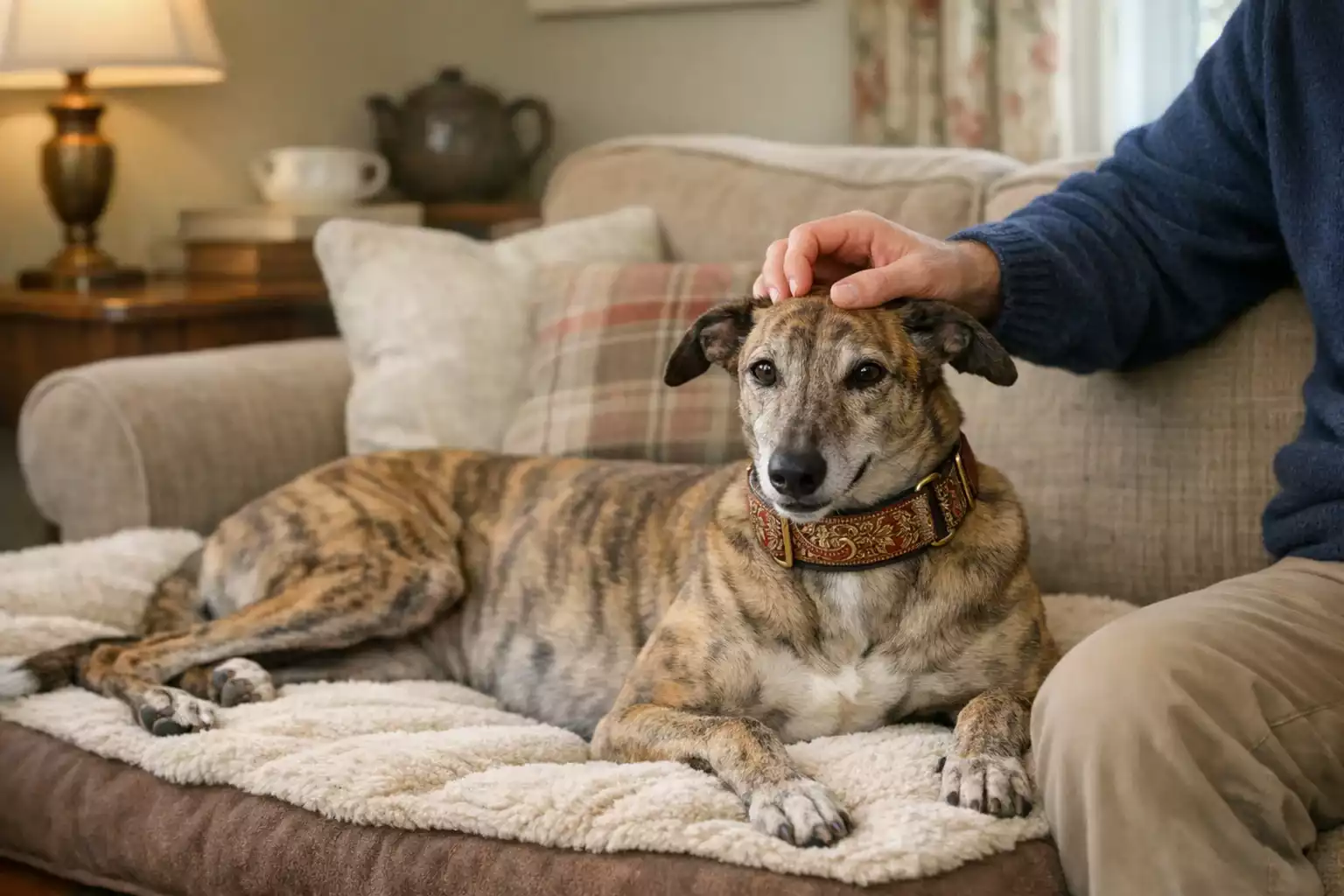
Adoption numbers show encouraging momentum. The first half of 2025 recorded a 37% increase in adoptions compared to the same period in 2024, according to GBGB data. This growth reflects sustained publicity campaigns, improved processes at homing centres, and a cultural shift that has made retired greyhounds fashionable as pets. The breed's calm temperament, minimal exercise needs despite their athletic reputation, and gentle demeanour suit urban apartment living as well as suburban gardens.
"The number of racing greyhounds who never have the opportunity to experience a loving home when their racing career is over is unacceptable, and the base line injury and retirement figures published must be improved. It is unacceptable that any greyhound suitable for homing is put down."
— Lisa Morris-Tomkins, CEO, Greyhound Trust
Sheffield supports local rehoming through partnerships with regional rescue organisations. Dogs retiring from Owlerton receive assessments and placement through established channels, with trainers expected to fulfil their responsibility under the Greyhound Racing Scheme before transferring that responsibility to approved centres. The financial bond posted for each racing dog partly covers these transition costs.
Adopting a retired racer differs from buying a puppy. Greyhounds arrive with formed personalities, known histories, and sometimes quirks shaped by their racing careers. They may not have lived in houses or encountered domestic objects like vacuum cleaners and televisions. The adjustment period requires patience but typically proceeds faster than new owners expect. Within weeks, most retired greyhounds settle into their second career as household companions, sleeping long hours, enjoying gentle walks, and demonstrating the loyalty that makes them prized pets.
Frequently Asked Questions
What days does Sheffield Owlerton race?
Sheffield Owlerton runs a consistent weekly schedule split between afternoon and evening sessions. BAGS meetings, which supply live coverage to betting shops nationwide, take place on Tuesday, Thursday, and Sunday afternoons. Evening racing for trackside attendance happens on Friday and Saturday nights. This schedule delivers approximately 260 race meetings per year, making Owlerton one of the busiest venues in UK greyhound racing. Actual race times vary slightly depending on the meeting type, but afternoon cards typically begin around 11:30 AM while evening cards start around 7:00 PM. The fixture list is published several weeks in advance through the Owlerton Stadium website and aggregated by services like RPGTV, which broadcasts many Sheffield fixtures live. Public holidays occasionally shift the regular schedule, so checking before travelling to the track is advisable.
How do I read Sheffield greyhound form figures?
Form figures appear as a sequence of numbers representing the dog's finishing positions in its most recent races, read from left to right starting with the latest run. A figure of 1 indicates a win, 2 indicates second place, 3 third, and so on through to 6 for last place in a standard six-dog race. The letter M appears when a dog ran mid-division in a trial rather than a competitive race. The letter T indicates a trial run that does not count toward grading. A zero means the dog failed to finish or was disqualified. When analysing Sheffield form, pay particular attention to trends: a sequence showing 654321 indicates steady improvement, while 123456 suggests decline. Context matters enormously because a dog winning against A6 opposition and then finishing fourth against A2 opposition has actually proven itself capable of competing at higher grades. Always cross-reference form figures with sectional times and remarks codes to build a complete picture.
Which trap wins most at Sheffield Owlerton?
Trap one shows a modest statistical advantage at Sheffield across all distances combined, though the size of that advantage varies significantly depending on race distance. On sprint trips of 280 metres and 362 metres, inside traps hold a pronounced edge because the short run to the first bend of approximately 60 metres compresses the field and rewards dogs with clear rails passage. On standard distances of 480 and 500 metres, trap bias diminishes as the extra ground allows form to assert itself over starting position. On staying trips of 660 metres and beyond, trap statistics show near-equal win rates across all six positions because multiple bends and extended running time neutralise early positional advantages. The practical implication for bettors is to weight trap position heavily when analysing sprints, moderately when handicapping standard races, and lightly when assessing marathon contests. Never select a dog purely because of trap draw, but equally never dismiss trap position as irrelevant, particularly on shorter distances where it genuinely influences outcomes.
