
Best Greyhound Betting Sites – Bet on Greyhounds in 2026
 Available in US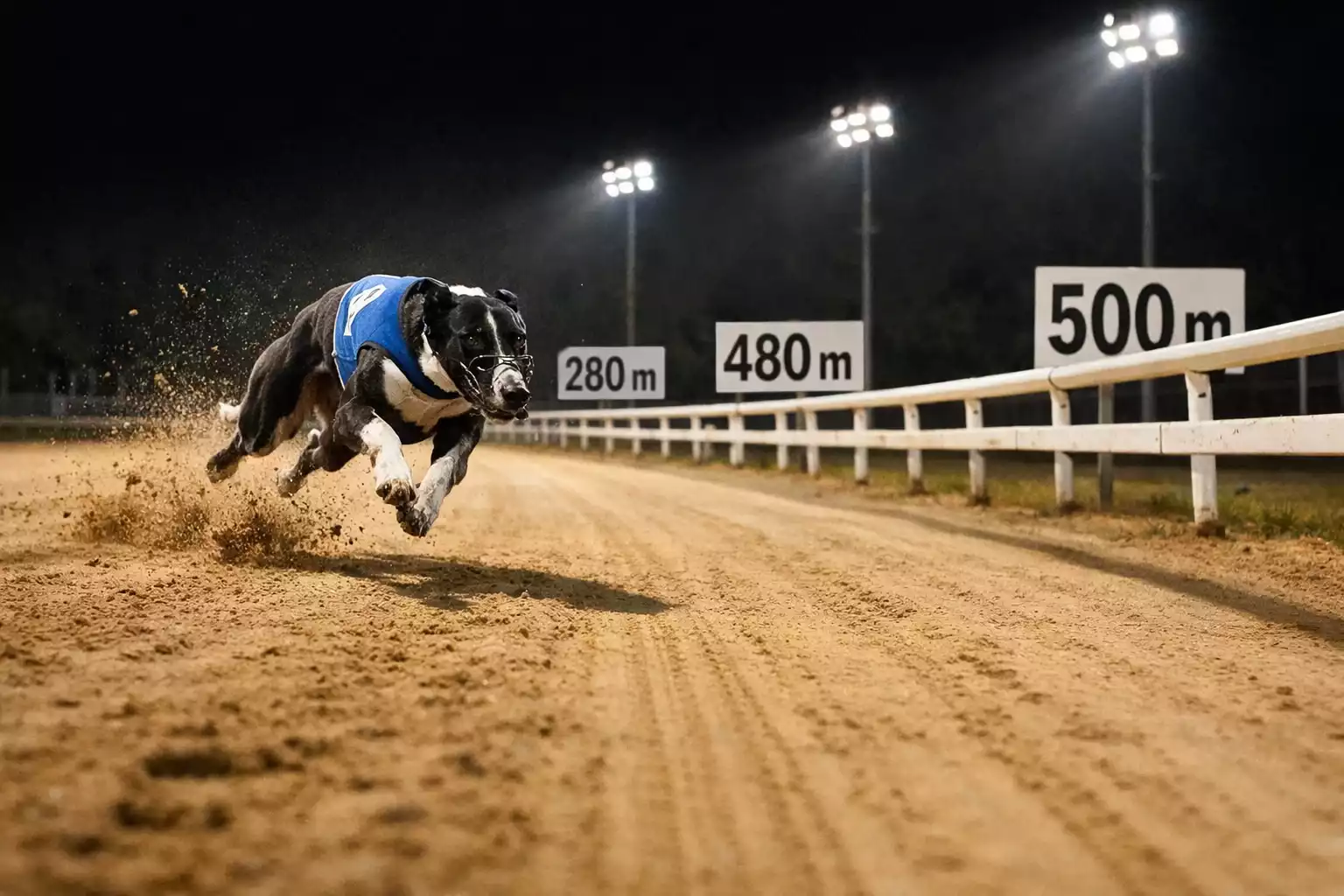
Sheffield greyhound track records tell a story that extends far beyond mere numbers. Each of the nine distances at Owlerton presents distinct tactical challenges, favouring different running styles, trap positions, and dog profiles. Understanding these differences separates informed betting from guesswork, revealing why the right trip matters as much as raw ability when predicting race outcomes.
The official track records at Sheffield span from the explosive 280-metre sprint through to the demanding 934-metre marathon. Between these extremes lie distances that test various combinations of early pace, sustained speed, and finishing stamina. Punters who grasp how each distance profile affects race dynamics gain advantages that casual observers miss.
This guide examines every Sheffield distance in detail. You will learn which distances favour trap position over form, where late-running dogs find their best opportunities, how hurdle racing differs from flat competition, and how to identify when a dog competes at its optimal trip versus one where it struggles. By the end, assessing distance suitability will become a natural part of your Sheffield race analysis.
Sheffield Distance Overview
Sheffield Owlerton offers nine distinct racing distances across its 425-metre circumference: 280m, 362m, 480m, 500m, 500m hurdles, 660m, 720m, 915m, and 934m. This range exceeds most British tracks, providing opportunities for specialists at every trip category from pure sprinters through genuine stayers.
The 480-metre distance dominates Sheffield’s racing calendar. Most graded races occur over this trip, making it the bread-and-butter distance where form analysis proves most reliable due to the extensive data available. Dogs compete over 480 metres several times before stepping up or down in trip, establishing clear performance benchmarks for comparison.
The 500-metre flat complements the 480-metre schedule, offering slightly longer races that require marginally more stamina without fundamentally changing race character. The additional twenty metres does affect some dogs more than others, making distance comparisons between these similar trips worthwhile during analysis.
Sprint distances of 280 metres and 362 metres appear less frequently but attract specialists whose explosive early pace might not sustain over standard trips. Staying events at 660 metres and beyond occur occasionally, typically in specific graded races or feature competitions where distance aptitude forms part of the selection criteria.
The 500-metre hurdles operates as a specialist discipline requiring jumping ability alongside running speed. Hurdle races attract dogs with proven jumping technique, creating a distinct population of competitors whose form over flat distances may not predict hurdle performance accurately.
Understanding which distances appear on any particular Sheffield card helps focus preparation. A card heavy on 480-metre races rewards thorough form study, while cards featuring unusual distances might suit punters with specialist knowledge of those trips. The racing programme varies by day and meeting type, with BAGS fixtures typically concentrating on standard distances while feature meetings incorporate more variety.
The variety of Sheffield distances creates opportunities for dogs transitioning between trip categories. Young dogs might begin careers at sprint distances before stepping up as stamina develops, while older dogs sometimes drop back in distance when pure speed declines. Tracking these transitions reveals developmental arcs that inform betting decisions beyond simple recent form.
British greyhound racing has evolved toward tracks offering diverse distance options, reflecting industry recognition that distance specialisation creates better racing. Sheffield’s nine distances position it among venues best able to place dogs appropriately, matching individual abilities to suitable trips. This careful placement benefits both welfare outcomes and betting market efficiency, since dogs competing at appropriate distances produce more predictable performances.
Sprint Races: 280m and 362m
Sprint racing at Sheffield rewards explosive early pace above almost all other qualities. The 280-metre distance covers barely more than half a lap, leaving minimal opportunity for dogs to recover from slow starts or unfavourable first-bend positions. The current track record of 15.65 seconds, set by Coolavanny Galiv in April 2022, demonstrates just how quickly these races conclude.
Trap draw dominates sprint race outcomes more than at any other Sheffield distance. Inside traps one and two provide the shortest path to the first bend, giving fast-breaking dogs from these positions significant advantages. Outside draws face the geometry problem of covering more ground while competing for the same rail position, making trap six a challenging draw even for quick breakers.
First-bend position essentially determines sprint results in most races. A dog reaching the bend first with clear racing room typically maintains that advantage through the remaining distance, while dogs checked or crowded at the first bend rarely recover given the minimal time available. Analysing early pace from racecard remarks becomes critical for sprint prediction.
The 362-metre distance extends sprint racing slightly, introducing a brief straight section that occasionally allows recovery from first-bend trouble. The track record of 20.82 seconds at this distance, held by Farloe Bubble since October 1997, indicates the longer sprint trip while retaining essentially sprint characteristics. Dogs capable of sustaining speed through this additional distance sometimes outperform pure sprinters who fade in the closing stages.
Sprint specialists often show distinctive form patterns: dominant wins when leading, poor performances when trapped behind traffic. Identifying dogs with this profile helps predict which runners will excel versus struggle depending on trap draw and opposition. A sprint dog drawn trap one against slow starters represents a different proposition than the same dog drawn trap six against quick breakers.
Betting strategy for sprints focuses heavily on predicted first-bend scenarios. Strong favourites from inside draws often represent poor value because the market recognises their advantage. Conversely, capable dogs poorly drawn sometimes drift to attractive prices despite retaining winning chances if the break favours them. The variance in sprint racing exceeds standard distances, making these races simultaneously exciting and unpredictable.
Weight becomes particularly relevant in sprint analysis. Heavier dogs sometimes struggle to reach maximum speed quickly enough for sprint success, while lighter runners accelerate more readily. Checking weight changes alongside sprint form helps identify dogs whose recent performances reflect conditioning rather than ability changes.
Standard Distances: 480m and 500m
The 480-metre distance represents Sheffield’s primary racing trip, accounting for the majority of races on most cards. This distance balances early pace importance against sustained speed requirements, creating races where form analysis proves most predictive. The track record of 27.27 seconds, set by Roxholme Magic in September 2020, provides a benchmark against which everyday performances can be measured.
At 480 metres, dogs complete slightly more than one full lap of the 425-metre track. This configuration means navigating two bends, with the first bend remaining crucial but the second bend and home straight offering genuine opportunity for positional changes. Dogs crowded at the first bend sometimes recover to place or even win, unlike sprint distances where early trouble proves fatal.
Form analysis over 480 metres benefits from extensive data availability. Most Sheffield regulars accumulate numerous runs at this trip, revealing consistent patterns of ability, running style, and performance variation. Time comparisons become reliable when both dogs have recent 480-metre form, enabling direct assessment rather than extrapolation from different distances.
The 500-metre trip adds twenty metres that occasionally reveal stamina limitations invisible over 480 metres. Dogs who fade in the final stages at 500 metres might sustain their speed adequately at 480 metres, while genuine stayers sometimes prefer the slightly longer trip. Comparing performances across these adjacent distances helps identify where individual dogs reach their optimal range.
Trap draw matters less at standard distances than sprints, though inside positions retain advantage through shorter path to the first bend. A capable dog from trap six can win 480-metre races by recovering from wide running during the second half of the contest, an outcome essentially impossible over 280 metres. This reduced draw dependency makes form the primary selection factor at standard trips.
Running style diversity appears most clearly at 480 metres. Front-runners who lead throughout compete against closers who finish strongly, with mid-race pace often determining which style prevails. Races featuring multiple front-runners sometimes set up for closers as early leaders exhaust each other, while single-pace races favour those who lead and maintain even tempo.
Grading at Sheffield primarily operates through 480-metre performance. Dogs typically begin careers at lower grades and progress upward through consistent winning, or drop downward after struggling against stronger opposition. Understanding where a dog sits in the grading structure helps contextualise recent form: wins against weak opposition mean less than places against stronger fields.
The 500-metre distance at Sheffield presents particular interest when comparing against 480-metre form. Some dogs show negligible difference between trips, performing identically over either distance. Others reveal clear preferences, running measurably faster or finishing positions better at one trip versus the other. These individual variations make head-to-head distance comparison valuable when a dog has recent form over both trips.
Sectional times at standard distances reveal early pace and finishing ability more clearly than at sprints where everything happens quickly. First-bend sectionals show which dogs contest the lead, while closing splits identify strong finishers. Combining sectional analysis with trap position and running style preferences creates comprehensive race previews for 480-metre races where data availability supports detailed assessment.
500m Hurdles: The Specialist Event
Hurdle racing represents a distinct discipline within greyhound racing, requiring jumping ability alongside flat racing speed. Sheffield’s 500-metre hurdle course presents dogs with obstacles that must be cleared efficiently rather than merely jumped. The track record of 28.96 seconds, set by Razldazl Raidio in April 2017, shows the time penalty relative to flat racing over equivalent distance.
Jumping technique separates successful hurdlers from dogs who struggle with obstacles. Some greyhounds clear hurdles with minimal disruption to stride pattern, maintaining speed throughout the course. Others jump awkwardly or hesitate before obstacles, losing momentum that proves difficult to recover. Identifying proven hurdlers from racecard form becomes the primary selection factor.
Flat form provides limited guidance for hurdle prediction. A dog excellent over 500 metres flat might struggle badly with hurdles, while moderate flat performers sometimes excel when obstacles play to their strengths. Dedicated hurdle specialists appear frequently in hurdle races, having developed technique through repeated competition that newer dogs lack.
The physical demands of hurdle racing create injury considerations absent from flat competition. Jumping strains joints and muscles differently than flat running, and some dogs prove unsuited to the repetitive impact despite adequate jumping technique. Trainers sometimes limit hurdle appearances for dogs they wish to protect for flat careers, while specialists might race predominantly over hurdles.
Trap draw affects hurdle races similarly to flat sprint-standard distances, though the breaking dynamics sometimes shift as dogs anticipate the first obstacle. Some hurdlers deliberately hold position early to approach obstacles with clear sightlines, creating different race dynamics than flat competitions where early pace always matters.
Betting on hurdle races rewards specialist knowledge. Regular hurdle punters accumulate familiarity with the specialist population, recognising proven performers whose form might not appear impressive to casual observers. This informational advantage creates potential edge for those willing to follow the hurdle schedule consistently rather than treating these races as occasional curiosities.
Middle Distances: 660m and 720m
Middle-distance racing at Sheffield introduces stamina as a genuine selection factor. The 660-metre and 720-metre trips exceed standard distances substantially, requiring dogs to sustain speed through additional track coverage. The track record at 660 metres stands at 38.29 seconds, set by Billys Bullet in April 2015, while the 720-metre record shows 42.33 seconds from Ballyard Buddy in August 2012.
Late-running dogs find their best opportunities at middle distances. The extended trips allow time for closers to work through the field, particularly when early leaders exhaust themselves setting strong fractions. Racecard remarks showing RanOn or FinWl take on increased significance at these distances, indicating dogs capable of producing their best work in closing stages.
Pace analysis becomes more sophisticated at middle distances. Early speed matters for first-bend position, but dogs who press hard through the first lap sometimes fade badly in the final quarter. Identifying sustainable pace patterns versus front-running burnout helps predict which early leaders will sustain and which will collapse when challengers arrive.
Form over standard distances provides partial guidance for middle-distance assessment, though extrapolation carries risk. A dog excellent over 480 metres might lack the stamina for 660 metres, while a dog who fades over standard trips might actually prefer the longer test. Looking for previous middle-distance form, even from other tracks, helps evaluate whether a dog suits the trip.
Trap draw significance decreases at middle distances compared to sprints and standards. The extended running time allows more opportunity for positional recovery, reducing the permanent disadvantage of wide early running. Capable stayers from outside draws represent less of a discount at 660 metres than they would at 280 metres, making form relatively more important than draw.
The additional track coverage required at 660 and 720 metres creates tactical scenarios rarely seen at standard trips. Dogs occasionally settle into economical mid-pack positions through early stages before unleashing finishing bursts that would prove impossible over shorter distances. This pacing dimension rewards analysis of how individual dogs distribute their effort across race stages.
The occasional scheduling of middle-distance races creates betting opportunities for punters with specialist knowledge. Regular middle-distance observers develop familiarity with proven stayers that casual punters lack, sometimes creating market inefficiencies when form from different distances misleads the casual observer about trip suitability.
Staying Trips: 915m and 934m
Marathon racing at Sheffield tests genuine stamina over distances that lap the track multiple times. The 915-metre and 934-metre trips attract specialist stayers whose pedigrees and physical builds suit sustained effort rather than explosive speed. The track record at 934 metres stands at 56.28 seconds, held by Roxholme Magic since April 2016, while the 915-metre record of 55.58 seconds belongs to King Kane from August 2014. These times represent sustained excellence across more than two full circuits of the 425-metre track.
Stamina breeding becomes identifiable at staying distances. Certain bloodlines consistently produce dogs suited to marathon racing, while others rarely generate successful stayers regardless of individual conditioning. Experienced staying punters recognise these patterns, identifying promising stayers from pedigree information before track records confirm aptitude.
Race dynamics at staying trips differ fundamentally from shorter distances. Early leaders often deliberately set conservative fractions to preserve energy for later stages, creating tactical races where positioning matters less than at sprints. The extended distance provides time for dogs to find racing room, work through the field, and mount sustained challenges that would prove impossible over shorter trips.
Late pace dominates staying race outcomes more than at any other Sheffield distance. Dogs capable of accelerating in the final quarter regularly overhaul rivals who cannot sustain their earlier speed. Racecard remarks and sectional times revealing strong finishing ability take on heightened importance when analysing marathon races.
The occasional scheduling of staying races means smaller specialist populations compete regularly. Some dogs run almost exclusively at staying trips, building dedicated form books that reward follower attention. Others attempt staying trips occasionally, their standard-distance form providing uncertain guidance for marathon assessment.
Physical characteristics visible from racecard data sometimes indicate staying aptitude. Lighter dogs often excel at marathon trips where carrying less weight over extended distances provides advantage. Age sometimes correlates with staying success, as older dogs who have lost pure speed sometimes retain stamina that suits longer tests.
Repeat performers in staying races deserve particular attention. A dog who has previously won or placed at 915 or 934 metres has demonstrated proven stamina that first-time marathon attempters cannot match. This experience factor often outweighs raw ability when assessing staying race contenders.
Betting value frequently appears in staying races because market assessment proves difficult. Casual punters may overweight recent standard-distance form that becomes less predictive at marathon trips, while specialists who follow staying form closely identify proven stayers whose pricing reflects inappropriate comparison against sprint or standard specialists.
Matching Dogs to Distances
Identifying a dog’s optimal distance requires synthesising information from breeding, past performances, and physical characteristics. The right trip, right dog principle underlies successful distance analysis: a moderate runner at their preferred trip often outperforms a superior runner stretched beyond their aptitude. Learning to recognise distance suitability improves selection accuracy across Sheffield’s varied programme.
Past performance at different distances provides the most reliable distance assessment. A dog who consistently performs better at 660 metres than 480 metres probably prefers the longer trip, regardless of what breeding or physical characteristics might suggest. Form sequences showing distance experiments, where dogs try different trips before settling into consistent scheduling, often reveal natural aptitude through results.
Physical build offers clues when race form proves limited. Compact, muscular dogs typically suit sprint distances where explosive acceleration matters. Lighter, more streamlined dogs often excel at staying trips where sustained efficiency outweighs raw power. These generalisations admit exceptions, but provide reasonable starting hypotheses when evaluating dogs with limited form at specific distances.
Running style correlates with distance suitability in predictable patterns. Front-runners who lead and fade usually prefer shorter trips that conclude before their stamina expires. Closers who run on strongly often suit longer distances that provide time to employ their finishing ability. Mid-race style indicating neither extreme early pace nor strong finishing might suggest standard distances as the natural range.
The Sheffield track configuration affects how distance suitability translates to performance. Wide runners might actually prefer longer distances where their sweeping style has time to work, while railers who contest the first bend strongly often excel at sprints where that initial advantage proves decisive.
Trainers sometimes experiment with distances as dogs mature or return from layoffs. A dog moved up in trip might be revealing developing stamina, while a dog dropped back to shorter distances might be showing declining ability to sustain pace. These trainer decisions often reflect informed assessment that punters can incorporate into their own analysis.
Distance analysis integrates with other selection factors rather than replacing them. A dog perfectly suited to the distance still needs adequate form, reasonable trap draw, and competitive ability against specific opposition. Distance suitability shifts probabilities rather than guaranteeing outcomes, making it one component of comprehensive race assessment rather than the sole determinant of selection.
The regulated structure of British greyhound racing supports accurate distance placement. As Jeremy Cooper, Chair of the Greyhound Board of Great Britain, has emphasised regarding welfare priorities: “We have placed welfare at the very heart of licensed racing.” This welfare focus includes matching dogs to appropriate distances, ensuring competitors race within their physical capabilities rather than being stretched beyond sustainable limits. The emphasis on proper placement benefits both dog welfare and betting market integrity.
Developing distance intuition requires accumulated observation. Following Sheffield racing regularly reveals which dogs succeed at which trips, how trainers manage distance transitions, and how the market prices distance specialists versus generalists. This experiential knowledge builds naturally through consistent attention, eventually enabling rapid distance assessment that newer observers cannot yet achieve.
Sheffield Race Distances — More on this topic at sheffield dogs results.
See also Sheffield Greyhound Trainers.
