
Best Greyhound Betting Sites – Bet on Greyhounds in 2026
 Available in US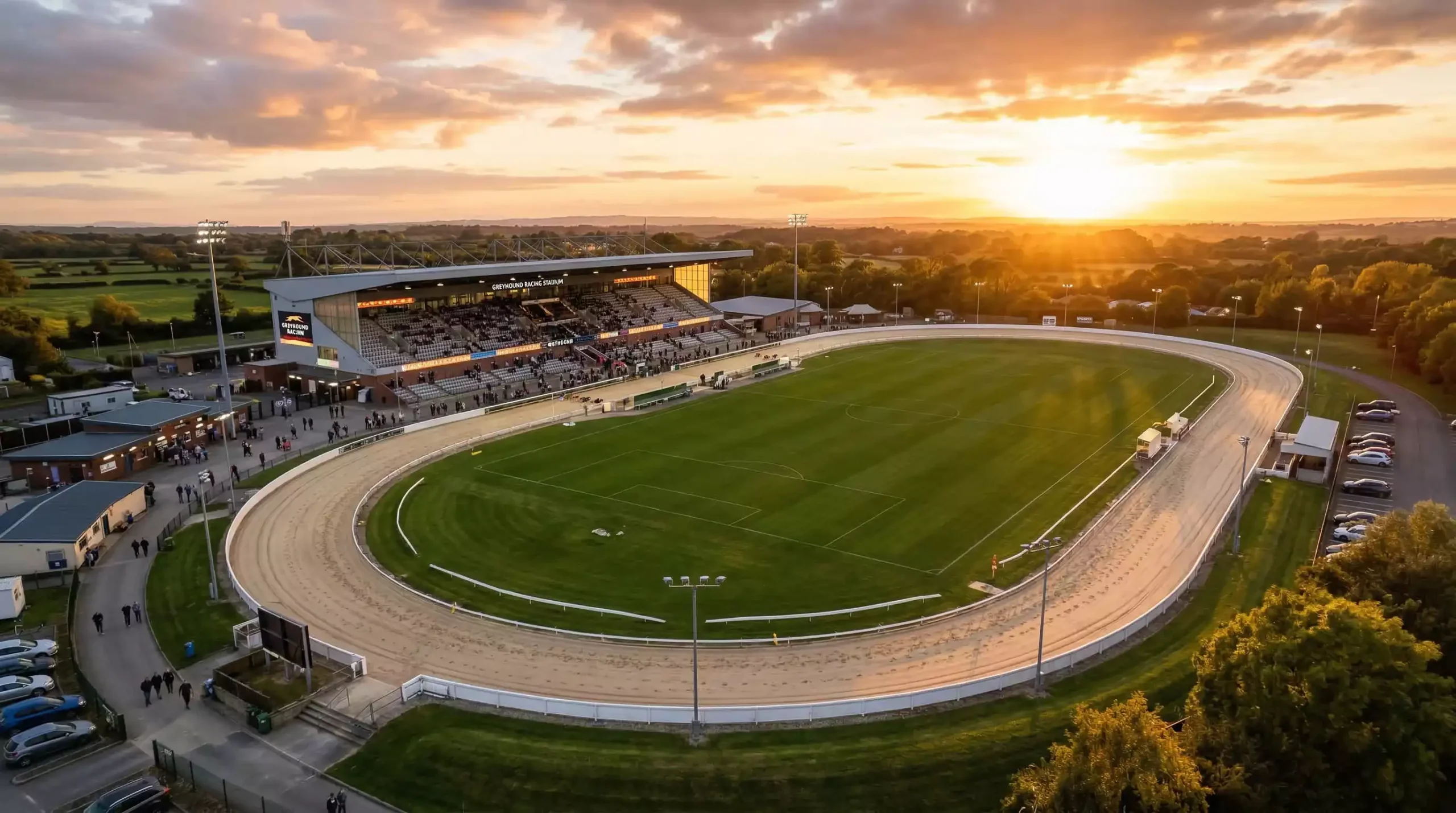
Every greyhound track tells a story through its geometry. Sheffield Owlerton, tucked into the Hillsborough district since 1929, tells one of calculated turns, measured straights, and an engineering legacy that continues to shape modern racing outcomes. The technical specifications of this venue are not mere trivia for groundskeepers—they form the foundation of every betting decision worth its salt.
Understanding track layout separates the punter who studies form from the one who truly understands why certain dogs excel here while struggling elsewhere. At Owlerton, the numbers reveal everything: a 425-metre circumference, a run to the first bend that varies by distance, and an Outside Swaffham hare system that dictates the entire racing dynamic. These measurements translate directly into race results, trap biases, and the subtle advantages that sharp bettors exploit week after week.
Track Dimensions and Geometry
Sheffield operates on a 425-metre circumference with a run to the first bend measuring between 60.5 and 62 metres depending on the starting position. These figures place Owlerton among the medium-sized British tracks—tight enough to favour inside runners at certain distances, yet spacious enough to reward genuine early pace on the longer trips.
The track’s oval configuration features two distinct straights connected by sweeping bends. The home straight, where the action unfolds before the finish line, runs parallel to the main grandstand, providing spectators with an unobstructed view of the closing stages. The back straight, partially obscured from the main viewing areas, is where many races are won and lost as dogs jockey for position heading into the third and fourth bends.
What makes Sheffield’s geometry particularly interesting is its asymmetry. The first bend is positioned to create that 60.5 to 62 metre run-up, giving dogs launched from wider traps a fighting chance to secure their racing line before the crowding begins. This measurement is critical: too short, and wide runners would be systematically disadvantaged; too long, and early pace becomes the only factor that matters. Owlerton’s design strikes a balance that keeps races competitive across all six traps.
The stadium accommodates 4,000 spectators and maintains parking for 700 vehicles, figures that reflect its status as a major Northern venue rather than a peripheral flapping track. This capacity supports the 260 race meetings held annually, making Sheffield one of the busiest licensed tracks in Britain. The infrastructure matters because it sustains professional-level racing with consistent maintenance standards, which in turn means the track specifications remain reliable season after season.
For the analyst, Sheffield’s dimensions dictate specific expectations. The 425-metre circumference means dogs complete roughly one and three-quarter laps during a standard 480-metre race, encountering four bends with their associated crowding risks. On the longer 934-metre marathon distance, runners face the geometry more than twice over, making stamina and bend-negotiation skills paramount.
The Outside Swaffham Hare System
Sheffield employs an Outside Swaffham hare, a mechanical lure system that runs along the outer rail of the track. This seemingly minor detail fundamentally shapes how races unfold. Unlike inside hare systems used at some venues, the outside configuration at Owlerton means the lure travels along the longer path, and more crucially, encourages a particular racing dynamic where wide-running dogs face different challenges than at inside-hare tracks.
The Swaffham system itself is an industry standard, named after the Norfolk track where it was developed. The mechanical arm extends from a motorised unit and carries a fabric hare at a controlled distance ahead of the leading dogs. Operators adjust speed throughout the race, maintaining that tantalising gap that keeps greyhounds in full pursuit without allowing them to catch the lure. At Sheffield, experienced operators know the track intimately, adjusting the hare’s pace to account for field quality and race distance.
For bettors, the outside hare system carries practical implications. Dogs naturally drift towards the lure as they run, meaning those drawn in outside traps may find it easier to hold their racing line through the bends. Conversely, inside-drawn dogs must resist the pull towards the lure or risk being carried wide, losing ground on each turn. This dynamic is most pronounced through the first and second bends, where the pack is still bunched and any deviation from the optimal racing line costs lengths.
The hare’s positioning also affects sectional times. First-bend splits at Sheffield reflect not just raw speed but how efficiently each dog transitions from the straight-line trap exit into the bend while pursuing an outside-running lure. Sharp inside runners who can ignore the lure’s position and rail hard gain an advantage that their raw speed alone would not predict. The Swaffham system, then, is not a neutral element of the track—it actively rewards certain running styles over others.
Sand Surface Characteristics
Owlerton runs on a sand-based surface, the dominant track material across British greyhound racing. Sand offers several advantages over the grass surfaces still used by some venues: consistent footing regardless of season, faster drainage after rain, and lower maintenance costs for a track hosting over 260 meetings annually. For the greyhounds, sand provides reliable grip through the bends where centrifugal forces place maximum stress on their legs.
The grading and depth of Sheffield’s sand are maintained to GBGB standards, with regular harrowing between races to restore an even surface after the pack has churned through. This maintenance is visible between races if you watch the ground staff work the track, but its effects are felt in the times recorded. A freshly dressed surface runs marginally differently than one compacted by several races, a subtlety that experienced track-watchers factor into their late-card selections.
Weather interacts with sand in predictable ways. Heavy rain adds weight to the surface, slowing times across the board and favouring powerful, stamina-oriented runners over pure sprinters. Light moisture can actually improve grip, leading to faster sectionals as dogs maintain traction through the bends without the dust that can affect vision in dry conditions. Temperature matters too: cold sand is firmer and faster, while heat can dry the surface to the point where grip suffers.
Sheffield’s position in South Yorkshire means it experiences genuine seasonal variation. Winter meetings often see the heaviest going, while summer racing on dry, warm evenings produces the quickest times of the year. Punters comparing form across seasons should adjust their expectations accordingly—a 27.50-second 480-metre run in January suggests more raw ability than the same time recorded during an August heatwave.
How Layout Affects Racing
Every specification discussed above converges into practical racing outcomes. The 60.5 to 62-metre run to the first bend, combined with the outside hare system and Sheffield’s particular geometry, creates predictable patterns that informed bettors can exploit.
At the shorter 280-metre sprint distance, the run to the first bend comprises a significant portion of the entire race. Here, trap speed is everything, and the layout provides little opportunity for closers to recover lost ground. The 425-metre circumference means sprint dogs face less than one complete lap, minimising the cumulative effect of bending ability. Raw acceleration out of the boxes decides these races, and Sheffield’s dimensions ensure that truth remains consistent.
The standard 480-metre distance tells a different story. Dogs complete nearly one and three-quarter laps, encountering four bends where the outside hare system exerts its influence. The run to the first bend remains crucial—those 60-odd metres establish the racing order for most contests—but Sheffield’s tighter circumference means bend positions matter more than at larger tracks. A dog that loses two lengths at each of four bends gives away eight lengths over the race, roughly the winning margin in most graded contests.
At staying distances like the 934-metre marathon, Sheffield’s layout punishes inefficiency mercilessly. Two full laps plus change means eight bends, and the cumulative effect of even slight wide-running tendencies becomes decisive. The track’s specifications don’t change, but their impact compounds with each additional metre. This is why certain bloodlines dominate Sheffield’s longer races—they combine stamina with the track sense to hold the inside line against the outside hare’s pull.
Track records reflect these dynamics. Roxholme Kristof’s 27.27 seconds over 480 metres, set in September 2020, and Roxholme Magic’s 56.28 seconds over 934 metres both demonstrate what becomes possible when raw talent meets Sheffield’s specific geometry. These times are not just numbers; they are the product of dogs perfectly suited to this track’s dimensions, surface, and hare system working in harmony. Understanding the technical specifications, then, is not academic—it is the foundation of identifying which dogs can challenge those standards and which are fighting against the track itself.
Sheffield Owlerton Track Layout — More on this topic at sheffield dogs results.
See also Steel City Cup.
