
Best Greyhound Betting Sites – Bet on Greyhounds in 2026
 Available in US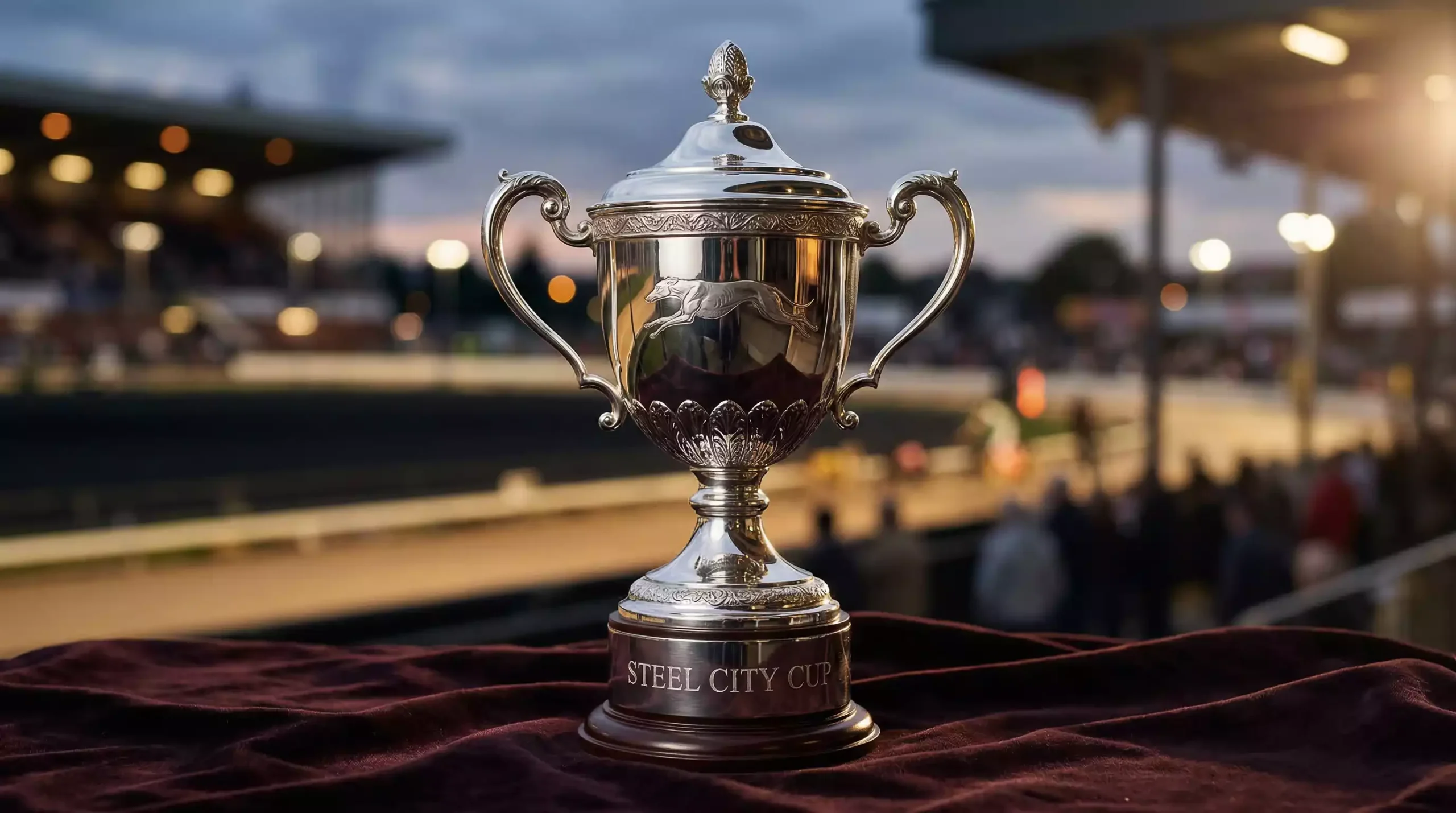
Sheffield’s crown jewel sits not in any trophy cabinet but in the memories of racing nights that stretched across nine decades. The Steel City Cup represents more than a competition at Owlerton Stadium—it embodies the track’s identity, a flagship event that draws the sport’s finest to South Yorkshire year after year.
Named for Sheffield’s industrial heritage, the Steel City Cup carries weight beyond its prize money. Victory here places a greyhound in distinguished company, adding their name to a roll call that traces the evolution of the sport itself. From the post-war boom through greyhound racing’s golden age and into the modern era, this trophy has reflected the changing landscape of British racing while maintaining its status as a prize worth pursuing.
Origins and Significance
The Steel City Cup emerged in 1970 as Sheffield’s answer to the flagship competitions held at London tracks. Though greyhound racing began at Owlerton on 12 January 1932, attracting 10,000 spectators to that opening night, it took nearly four decades before the stadium created its defining competition. The Steel City Cup answered the need for a centrepiece event that would anchor the racing calendar and generate the excitement necessary to fill the stadium’s 4,000 seats with open-class action.
The name itself reflects Sheffield’s identity during the industrial era. This was steel country, the forges and foundries that built Britain’s infrastructure, and the cup took that heritage as its own. There was deliberate symbolism in the choice—a suggestion that winning here required the same hardness and quality that Sheffield demanded of its metals. The connection between city and sport was never merely geographical.
In the context of British racing, the Steel City Cup positioned Sheffield as a serious venue capable of hosting open-class competition. While London tracks dominated the sport’s early decades, regional venues like Owlerton built their reputations through flagship events that proved they could attract the best dogs and trainers from across the country. The Steel City Cup served this purpose admirably, establishing a tradition that has outlasted many of its contemporaries.
The competition’s significance extended beyond Sheffield itself. Winning the Steel City Cup placed greyhounds on the national stage, their times and performances recorded and compared against results from Belle Vue, White City, and the other legendary venues. For trainers operating in the North, it represented a home chance at glory that didn’t require the expense and disruption of campaigning dogs in London. For bettors, it offered an opportunity to see open-class racing on familiar ground.
Notable Winners Through the Years
The roll of Steel City Cup winners reads as a history of British greyhound racing’s evolution. Each era produced its champions, and their victories at Sheffield illuminated the changing nature of the sport—from the heavy-boned coursing types of the early decades through to the streamlined athletes of modern racing.
The post-war period brought some of the competition’s most celebrated names. These were greyhounds that captured public imagination during racing’s attendance peak, when ten thousand spectators might gather for a major final. The Steel City Cup finals from this era were genuine events, covered in sporting press and discussed in pubs and factories across South Yorkshire.
Sheffield has hosted memorable performances that transcended the competition itself. Winners who went on to English Greyhound Derby glory first announced their potential on Owlerton’s oval. Others achieved their career peak here, finding in Sheffield’s specific geometry and racing conditions the perfect stage for their talents. The 425-metre circumference and Outside Swaffham hare system suited certain running styles particularly well, and astute trainers learned to target the Steel City Cup with dogs whose attributes matched these demands.
The competition has also showcased the work of the sport’s great kennels. Multiple winners from single training operations demonstrate both the quality of their stock and the advantages gained from deep familiarity with Sheffield’s track. Trainers who mastered Owlerton’s peculiarities returned year after year with genuine Steel City Cup contenders, their dogs conditioned specifically for the demands of this venue.
What connects the winners across decades is quality. The Steel City Cup has maintained grading standards that ensure only genuine open-class performers contest the final. This consistency means that comparing winners across eras, while accounting for changes in timing technology and track surface, reveals the sustained excellence the competition demands. A Steel City Cup victory from 1960 required the same fundamental attributes as one from 2020: speed, stamina, track sense, and the racing courage to perform under pressure.
Competition Format and Qualifying
The Steel City Cup operates as an open race, meaning entry is not restricted by grading but by the willingness of connections to test their dogs against the best available competition. This structure separates the event from the weekly graded fare at Sheffield, where races are constructed to produce competitive fields through careful matching of ability levels.
Qualifying for the final typically involves heats run in the preceding weeks. These preliminary rounds serve multiple purposes: they generate betting interest across several meetings, they allow trainers to gauge their dogs’ form and fitness, and they provide racegoers with a narrative arc as contenders emerge through the competition stages. The heat system also ensures that the final field represents current form rather than reputation alone.
Heat performances reveal much about a greyhound’s Steel City Cup credentials. The way a dog handles Sheffield’s geometry under pressure, their sectional times through the first bend, their response to crowding on the turns—all these elements become visible in the heats and inform analysis of the final. Sharp bettors watch these preliminary rounds closely, identifying value positions before the market fully adjusts.
The final itself runs over a distance suited to Sheffield’s track characteristics, typically the standard 480-metre trip that showcases the venue’s essential racing dynamics. Six dogs contest the final, drawn from trap one through six, with the draw introducing its familiar variables. At open-race level, every trap position carries genuine significance, and the draw often shapes the betting market before the field even sets foot on the track.
Steel City Cup in the Modern Era
Contemporary greyhound racing operates in a changed landscape. Britain’s licensed track count has fallen from over 77 venues to just 21 today, concentrating competition and, paradoxically, intensifying the significance of surviving flagship events. The Steel City Cup has grown more important as alternatives have disappeared.
Sheffield continues to host 260 race meetings annually, and the Steel City Cup remains the calendar’s highlight. Modern coverage through RPGTV and streaming services brings the event to audiences who may never visit Owlerton in person, extending the competition’s reach beyond its regional origins. The betting market, now dominated by online operators, generates interest from punters across the UK who follow the competition’s progress through heats and into the final.
What has not changed is the sporting challenge. The track specifications remain as demanding as ever, the outside Swaffham hare still tests dogs through the bends, and the final asks the same questions of its contestants that it has asked for decades. Dogs must break cleanly, negotiate Sheffield’s geometry efficiently, and sustain their effort through nearly two laps of intensive racing. The Steel City Cup final remains a genuine test of greyhound excellence, as demanding in 2026 as it was in its earliest editions.
For Sheffield Owlerton, the Steel City Cup represents continuity in a changing sport. As long as this competition endures, the track maintains its status among Britain’s significant racing venues—a place where the best come to compete, and where victory carries meaning beyond the prize money on offer.
Steel City Cup — More on this topic at sheffield dogs results.
See also Owlerton Stadium History.
