
Best Greyhound Betting Sites – Bet on Greyhounds in 2026
 Available in US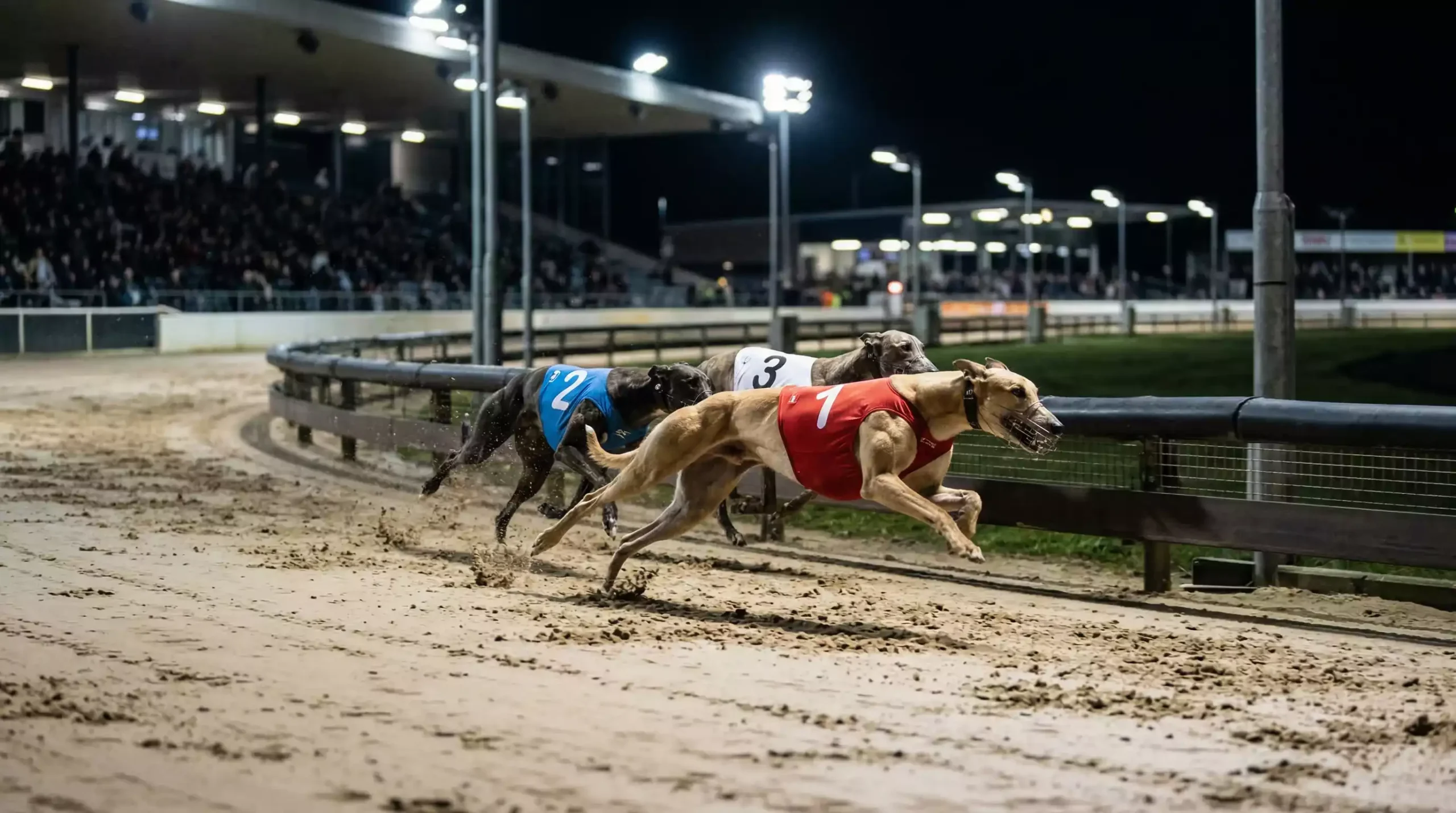
Speed in segments. That phrase captures something essential about greyhound sectional times that overall finishing times cannot. A dog crossing the line in 28.50 seconds over 500 metres might have led from trap to finish or rallied from fifth place after a poor break. The raw time tells you nothing about how the race unfolded. Sectionals do.
At Sheffield, where the 425-metre circumference and 60.5-metre run to the first bend create distinctive racing dynamics, understanding split times separates informed analysis from guesswork. With injury rates dropping to 1.07% across UK tracks in 2024, modern greyhound racing tracks focus intensely on data collection, and sectional timing represents one of the most useful metrics available. The first bend at Owlerton arrives quickly. Dogs breaking slowly from the traps face immediate trouble, while early leaders often convert that advantage into unassailable positions. Sectional data reveals these patterns before they repeat.
This guide explains what greyhound sectional times measure, how Sheffield’s track geometry shapes first-bend battles, and the practical methods for incorporating split analysis into your assessment of any race. The numbers exist. Learning to read them properly takes your understanding of form to another level entirely.
What Sectional Times Measure
Sectional times break a greyhound race into measurable segments rather than recording only the final result. The most common sectional recorded in UK racing is the time to the first bend, sometimes called the run-up time or trap-to-bend split. This single measurement reveals more about race dynamics than almost any other figure on a racecard.
When a greyhound leaves the traps, the clock starts. That clock captures the sprint across the sand to the first bend, where crowding, checking, and positional battles determine much of what follows. A fast sectional here typically means clean running, good track position, and room to race. A slow sectional might indicate traffic problems, a poor break, or simply a dog lacking the early pace required for that particular distance.
Some racecards also display mid-race sectionals, measuring splits between specific points on the circuit. These additional readings help identify dogs that finish strongly versus those that fade in the final straight. The cumulative picture these numbers paint goes far beyond what finishing positions alone can tell you. A second-place finish with a fast sectional suggests a dog that ran into trouble; the same finish with a slow sectional tells a different story altogether.
Sectional times also expose the difference between calculated and actual performance. A dog that posts identical finishing times across two races might have achieved them in completely different ways. One run shows blazing early speed that faded in the final straight. Another shows a measured early effort followed by a sustained run home. Both outcomes produced the same clock time, but only one pattern suggests the dog handles that distance well. The sectionals make this visible where raw times cannot.
The sport’s commitment to detailed data collection reflects broader welfare improvements. As Jeremy Cooper, Chair of GBGB and former Chief Executive of the RSPCA, noted: When I joined GBGB as Chair in 2018 shortly after the launch of the Greyhound Commitment, I was clear the sport needed to achieve significant improvements in welfare. Thanks to the strategic vision of Professor Madeleine Campbell and the relentless drive and determination of our Board along with the support of our entire sport, we have placed welfare at the very heart of licensed racing.
What you find in sectional data is essentially the race within the race. The invisible battle for position that determines finishing order becomes readable, predictable, and ultimately actionable for anyone willing to study the patterns these numbers reveal.
Sheffield’s First Bend Dynamics
Sheffield’s track geometry creates specific first-bend characteristics that shape every race at Owlerton. The run to the first bend measures between 60.5 and 62 metres, varying slightly by starting position. That distance forces rapid decision-making. Dogs have roughly three seconds to establish position before the bend arrives, and what happens in those seconds often determines the race outcome.
The 425-metre circumference places Sheffield among the mid-sized UK tracks, but the relatively short run-up creates a premium on early speed. Dogs drawn inside face less ground to cover but risk being squeezed against the rail. Wide runners have more room to manoeuvre but must cross additional ground to reach the bend in contention. These trade-offs appear starkly in sectional data when you compare times across different trap draws.
Owlerton uses an Outside Swaffham hare, which influences running lines through the bend. Dogs following the rail often find the turn tighter than those running a few feet wider. The fastest route through depends partly on the dog’s natural running style and partly on where the pack congestion develops. First-bend sectionals expose which dogs consistently find clear running room and which seem prone to interference regardless of draw.
Crowding at the first bend represents the single greatest source of trouble in greyhound racing. When six dogs converge on one piece of track at full speed, something usually gives. A dog posting a slow first-bend sectional might have encountered another runner’s shoulder, lost momentum checking off heels, or simply found no gap through the traffic. Racecard remarks like Crd (crowded), Ck (checked), and Bmp (bumped) correlate strongly with slow sectionals. Read them together, and the picture sharpens considerably.
Sheffield’s evening meetings often feature graded races where dogs of similar ability compete. The first bend becomes more congested because finishing times cluster tightly. In open races, where class differences are more pronounced, a quality dog might clear the bend unchallenged simply by being faster out of the traps. The context matters. A 4.20-second sectional at Sheffield means something different in an A1 race than it does in a maiden contest.
Using Sectionals for Analysis
Practical application of sectional times starts with comparison. A single sectional number means little in isolation. The same figure compared against a dog’s own history, against its rivals in tonight’s race, and against track standards transforms into genuine information. Building that comparison requires consistent data, which most racecard providers now supply.
Begin with the dog’s recent sectionals at Sheffield specifically. Track familiarity matters. A dog posting fast first-bend times at Nottingham might struggle at Owlerton’s tighter bends. Look for patterns across at least three runs at the same venue before drawing conclusions. Consistency matters more than occasional brilliance. A dog that posts 4.15, 4.18, and 4.16 sectionals demonstrates reliable early pace. One showing 4.10, 4.35, and 4.22 introduces unpredictability that complicates analysis.
Next, compare sectionals against tonight’s opponents. Scan down the racecard and note the first-bend times for all six runners. Where does each dog typically position by the turn? If traps one and two both hold confirmed early leaders with near-identical sectionals, expect congestion on the inside. If the trap six runner shows faster sectionals than anyone drawn inside, watch for that dog sweeping around the field into an early lead.
Trap draw interacts with sectional analysis in ways worth noting. A dog with moderate early speed drawn inside may benefit from shorter running distance to the bend. The same dog drawn wide might never reach the bend in contention. When sectionals suggest two dogs will arrive at the first bend simultaneously, the inside draw usually prevails. These marginal advantages compound. One dog carries momentum into the bend while another checks off its shoulder. The sectional tells you this clash is coming before the race begins.
Sectionals also help evaluate poor recent form. A dog showing declining finishing positions but consistent early sectionals might simply be encountering traffic problems. Strip away the interference and the underlying speed remains intact. Conversely, deteriorating sectionals suggest genuine loss of form rather than bad luck. The distinction affects whether you expect improvement or continued decline.
Limitations and Context
Sectional times are tools, not guarantees. Several factors complicate straightforward interpretation and deserve acknowledgment before you place excessive weight on any single number.
Timing accuracy varies. Not all tracks record sectionals with identical precision, and even within one venue, timing equipment calibrations can shift. A dog appearing 0.02 seconds faster than a rival might be operating within the margin of measurement error rather than demonstrating genuine superiority. Treat small differences with appropriate scepticism.
Track conditions affect sectionals differently than finishing times. Heavy going slows dogs throughout a race but may disproportionately affect the break from traps, where grip matters most. A slower-than-usual sectional on a wet Sheffield evening might reflect conditions rather than the dog’s form. Check the going report before assuming anything about the dog itself.
Sample size remains an issue for recent track arrivals. A dog with only two Sheffield runs provides limited sectional data. Three or four strong sectionals suggest genuine early pace. One fast time followed by a slow one tells you little except that variability exists. Wait for patterns to emerge rather than overreacting to incomplete information.
Finally, remember that races happen in real time, not on paper. Two dogs with identical sectionals do not arrive at the bend together if one encounters interference and the other finds clear running. The sectional tells you what usually happens, not what will happen. Greyhound racing involves six unpredictable athletes sharing limited space at considerable speed. Sectional analysis improves your probability estimates. It does not provide certainty, and treating it otherwise leads to disappointment. Use these numbers as one input among several, weigh them against other factors, and accept that even excellent analysis sometimes produces unexpected outcomes.
Sheffield Sectional Times — More on this topic at sheffield dogs results.
See also Greyhound Form Figures Explained.
