
Best Greyhound Betting Sites – Bet on Greyhounds in 2026
Loading...
The betting shop backbone. Walk into any licensed betting shop during the afternoon and you will likely find greyhound racing on the screens. These are BAGS meetings, the workhouse fixtures that sustain modern greyhound racing far more than the glamorous evening events most casual fans imagine. Without BAGS, the sport as currently structured would struggle to survive.
Sheffield participates heavily in the BAGS system, hosting multiple daytime meetings weekly that broadcast into betting shops across Britain. The financial model underpinning these fixtures differs fundamentally from traditional race night operations. Understanding how BAGS works explains much about contemporary greyhound racing economics, scheduling, and even race quality at tracks like Owlerton.
This guide unpacks the BAGS system: what the acronym means, where the money comes from, how Sheffield’s schedule fits the pattern, and what distinguishes these meetings from evening alternatives. The answer to why greyhounds race at 10:30 on a Tuesday morning lies in betting shop demand, and that demand shapes everything.
What BAGS Stands For
BAGS stands for Bookmakers’ Afternoon Greyhound Service. The name describes the product precisely. Bookmakers wanted greyhound content to fill afternoon hours in their betting shops. The service delivered exactly that. BAGS meetings run during daytime slots when horse racing is sparse, providing punters with live racing content and bookmakers with betting opportunities throughout the day.
The system emerged from recognition that betting shops needed constant content to attract customers. An empty screen in a betting shop costs money. Punters who drift away when racing ends might not return. Greyhound racing, with its rapid race cycles and straightforward betting markets, proved ideal for filling gaps in the schedule. BAGS formalised this arrangement into a structured industry fixture.
BAGS operates as a consortium involving major bookmaker chains and greyhound tracks. The bookmakers fund meetings in exchange for exclusive rights to broadcast and take bets. Tracks receive guaranteed income that sustains their operations regardless of trackside attendance. The symbiosis works because both sides need what the other provides. Bookmakers need content. Tracks need revenue. BAGS connects the two.
All 21 licensed UK tracks participate in BAGS racing to varying degrees. The meetings follow a coordinated national schedule ensuring that racing runs continuously through afternoon hours with minimal overlap. One track might race from 10:30 to 12:00, another from 11:30 to 13:00, and so on through the day. Punters in betting shops see constant action without significant gaps.
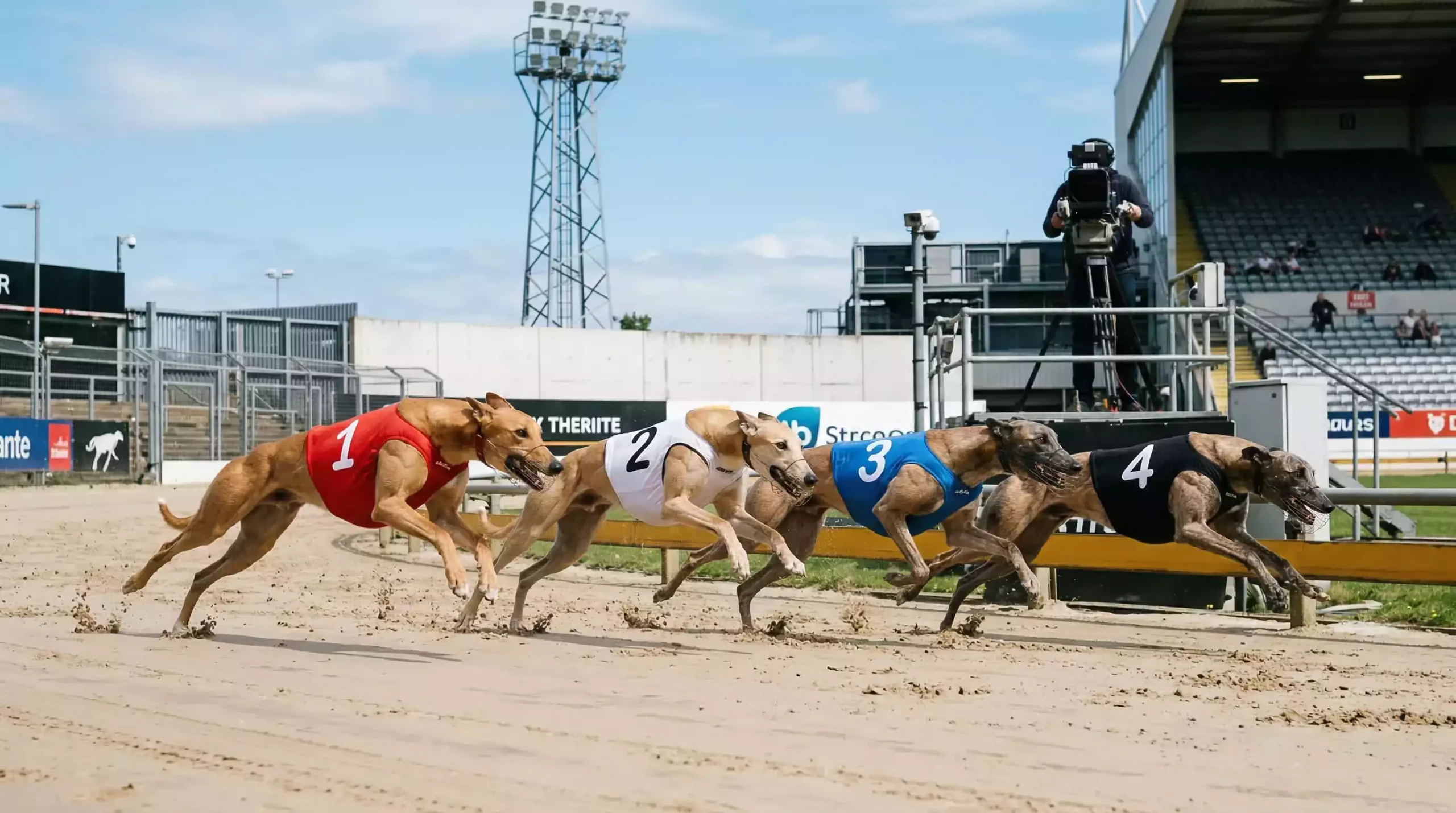
BAGS meetings rarely attract spectators to the track. Most stadiums remain largely empty during these fixtures, with only essential staff and trainers present. The atmosphere differs entirely from packed evening meetings. The racing happens for cameras and betting shop screens rather than live audiences. This reality shapes everything from race presentation to prize money structures.
How BAGS Funding Works
The financial architecture of BAGS racing centres on payments from bookmakers to tracks. These payments fund prize money, staffing, track maintenance, and operational costs. Without BAGS income, many UK greyhound tracks would face immediate financial difficulty. The sport’s economic dependency on bookmaker funding represents both its lifeline and its vulnerability, particularly given that voluntary contributions from bookmakers have declined 67% in real terms since 2008.
Bookmaker contributions flow through the British Greyhound Racing Fund, which collected £6.75 million in voluntary contributions during the 2024-25 financial year. These funds distribute across the sport, supporting track operations and welfare initiatives. The voluntary nature of contributions creates ongoing tension, as tracks argue for higher payments while bookmakers balance commercial pressures.
Individual BAGS meetings generate payments based on fixture agreements negotiated between tracks and the coordinating bodies. Tracks hosting more BAGS meetings receive more income. This arrangement incentivises tracks to maximise their BAGS scheduling, which explains the packed afternoon racing calendars at venues like Sheffield. Each meeting represents guaranteed revenue regardless of how many spectators attend in person.
Bookmakers benefit from the betting turnover these meetings generate. Industry estimates suggest bookmaker turnover on licensed greyhound racing reached approximately £800 million in recent years. The voluntary contribution rate of 0.6% of turnover explains the gap between gross turnover and actual contributions. Critics argue the rate should be higher, particularly given the sport’s welfare responsibilities. The GBGB has campaigned for a statutory levy that would replace voluntary contributions with mandatory payments, though this remains politically contentious.
Prize money at BAGS meetings reflects the commercial nature of the fixtures. Purses tend to be lower than evening open races but provide consistent earnings for trainers running dogs through the grading system. A dog racing twice weekly at BAGS meetings accumulates meaningful prize money over a career, even without winning prestigious events. The steady income suits kennels focused on volume rather than quality.
The funding model creates dependencies that shape the sport’s structure. Tracks must maintain relationships with bookmakers. Scheduling must accommodate betting shop demand. Race quality serves commercial needs rather than purely sporting considerations. Understanding these dynamics helps explain decisions that might otherwise seem puzzling to outside observers.
Sheffield’s BAGS Schedule
Sheffield Owlerton hosts BAGS meetings on multiple weekdays, contributing to the track’s total of around 260 racing meetings annually. The specific schedule rotates according to national coordination, but typical patterns see Sheffield racing during morning and early afternoon slots on several weekdays each week.
Race intervals at BAGS meetings follow tight schedules. Where evening meetings might allow fifteen minutes between races for entertainment and atmosphere, BAGS fixtures typically run races every seven to ten minutes. The compressed timing maximises the number of races per meeting, providing more betting opportunities while keeping the overall fixture within manageable time windows.
Each BAGS meeting at Sheffield typically comprises ten to twelve races. The distances vary according to the dogs available and the racing secretary’s planning, but standard trips over 480 metres and 500 metres predominate. Sprint races over 280 metres and staying trips over 660 metres appear regularly, offering variety for punters seeking specific race types.
Graded races form the majority of BAGS cards. These contests feature dogs operating at similar levels, producing competitive racing suitable for betting purposes. Open races appear occasionally at BAGS meetings but more commonly feature during evening fixtures where spectators can attend and higher-profile competitions justify enhanced prize money.
Information about upcoming Sheffield BAGS fixtures appears on bookmaker websites, specialist racing portals, and the track’s own communications. Advance racecards typically become available the day before racing, allowing time for analysis before betting markets open. The predictability of the schedule helps trainers plan their dogs’ racing patterns around regular weekly slots.
BAGS vs Evening Meetings
BAGS meetings and evening fixtures serve different purposes and attract different audiences. Recognising these differences helps you understand what to expect from each type of racing at Sheffield.
Evening meetings traditionally featured spectator attendance, track-side dining, and social atmosphere. Prize money ran higher, attracting better-quality dogs and trainers willing to travel for significant purses. Open races and feature competitions clustered around evening cards. The Steel City Cup and other prestigious Sheffield events run during these prime-time slots.
BAGS meetings prioritise throughput over spectacle. Empty grandstands face the track while races run primarily for broadcast audiences. The atmosphere feels industrial rather than entertaining. Staff handle essential operations while trainers prepare their charges efficiently. Between races, the track falls quiet in ways unimaginable during busy evening sessions.
Race quality at BAGS meetings varies considerably. Lower-grade races predominate, suitable for the commercial purpose these fixtures serve. A punter watching in a betting shop cares less about class distinctions than about competitive racing that produces interesting betting outcomes. Graded races where six similarly-rated dogs compete achieve this goal regardless of whether any runner would trouble genuine quality performers.
For form analysts, BAGS racing produces abundant data. Dogs racing frequently generate recent form that aids assessment. The volume of races creates sample sizes large enough for pattern recognition. A dog that has raced eight times in the past month provides more information than one appearing twice across the same period. The compressed schedule suits analytical approaches that depend on statistical patterns.
Some dogs thrive in BAGS conditions while others prefer evening atmospheres. The routine of frequent afternoon racing suits certain temperaments. Others seem to raise their game when crowds create energy and noise. Trainers learn which dogs fit which context and campaign them accordingly. Reading these preferences sometimes reveals opportunities when dogs switch between BAGS and evening competition. The BAGS specialist stepping up to an evening open might struggle. The quality dog dropping into a BAGS graded race might dominate. Both patterns recur often enough to warrant attention.