
Best Greyhound Betting Sites – Bet on Greyhounds in 2026
 Available in US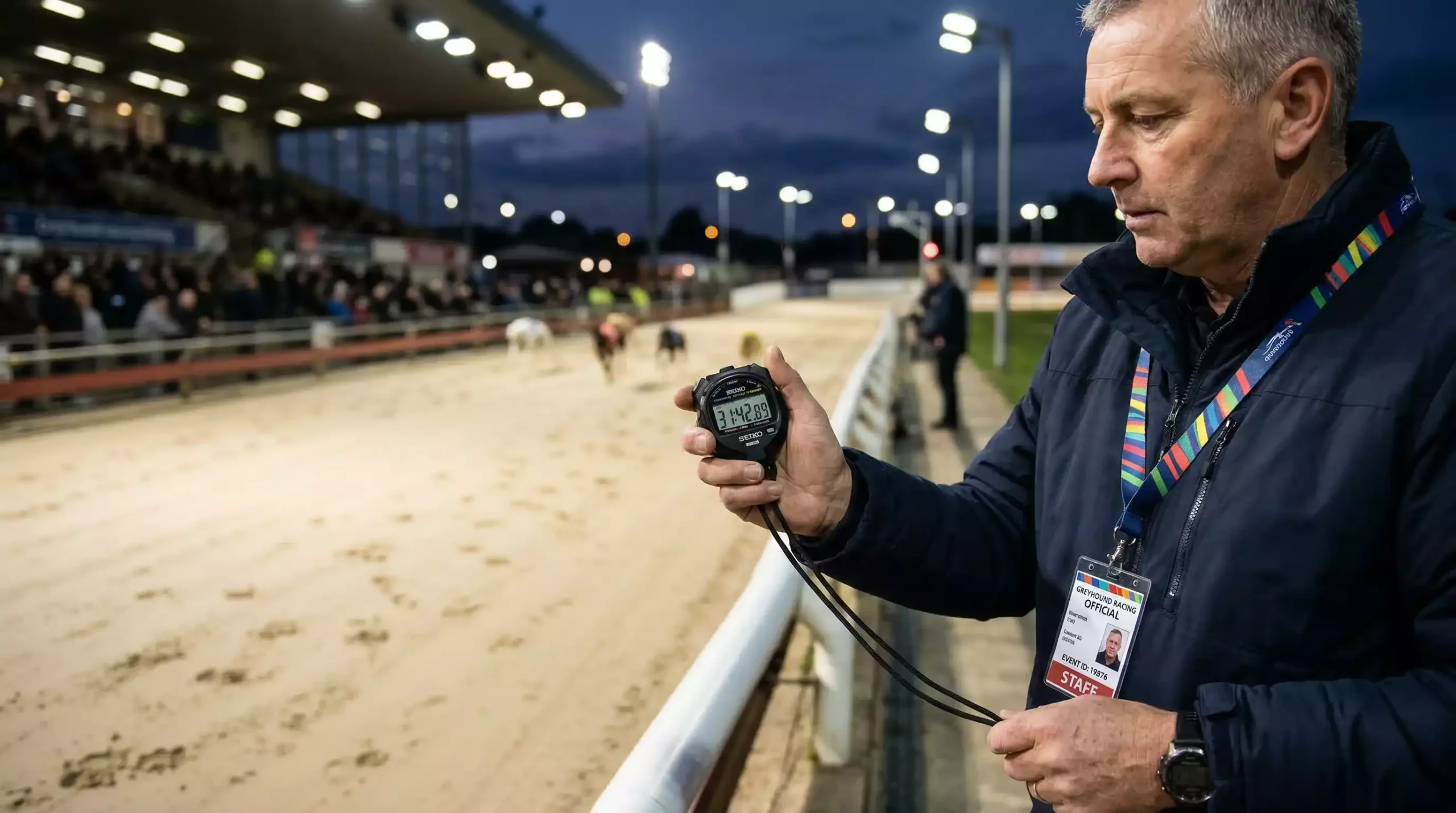
Leveling the field. A greyhound clocks 28.45 seconds for 500 metres at Sheffield on a Tuesday evening. The following week, a different dog runs 28.31 at the same distance. Is the second dog faster? Not necessarily. Track conditions change between meetings, and without adjusting for those variations, raw times tell incomplete stories.
Calculated times exist precisely to solve this problem. By applying a going allowance based on measured track conditions, analysts can compare performances across different days as if they occurred on a standardised surface. This adjustment transforms greyhound racing from a sport where times mean almost nothing between meetings to one where meaningful speed comparisons become possible. Understanding how calculated times work—and where they fail—separates casual observers from serious form students.
Actual vs Calculated Time
Every greyhound race produces an actual time—the raw figure recorded by the timing system from trap release to finish line. At Sheffield Owlerton, electronic timing captures these moments to hundredths of a second. The track record for 480 metres stands at 27.27 seconds, set by Roxholme Magic in September 2020. That figure represents actual time on one specific evening under conditions that may never repeat exactly.
Calculated time takes that raw number and adjusts it to a notional standard track condition. If conditions were slow that evening—perhaps rain had softened the sand, or cooler temperatures affected surface grip—the calculated time will be faster than the actual time, reflecting what the dog might have run under normal circumstances. Conversely, if conditions favoured quick times, the calculated time will be slower than actual, adjusting downward for an artificially fast surface.
The difference between actual and calculated times typically ranges from a few hundredths to half a second or more. A dog running 28.50 actual on a slow evening might show 28.22 calculated—a significant difference when margins of victory often amount to a length or less. That three-tenths gap could represent the difference between a winner and a fourth-place finisher in a competitive race.
Form guides published by services like Timeform display both figures, allowing punters to work with either. Actual times tell you what happened on the night. Calculated times tell you what it meant in comparative terms. Neither is objectively correct—they measure different things.
How Going Allowance Works
The going allowance for any race meeting emerges from trial runs before competitive racing begins. A track official runs trial greyhounds—dogs of known ability whose typical times are established—over the standard distance. The difference between their expected time and their actual trial performance generates the going figure for that evening.
If a trial dog usually runs 29.00 for 500 metres but clocks 29.15 on this particular evening, the going is deemed slow by 0.15 seconds. Every time recorded during that meeting then has 0.15 subtracted to produce calculated times. A race winner crossing in 28.80 actual becomes 28.65 calculated. The system assumes conditions remain broadly constant throughout the meeting, which holds reasonably well for tracks with consistent surfaces like Sheffield’s 425-metre circumference layout.
Different distances may carry different going allowances at the same meeting. The effect of slow going compounds over longer distances, so a 0.10 slow reading for 500 metres might translate to 0.18 slow for 720 metres. Form services apply these distance-specific adjustments automatically, though manual calculations require knowing the going declared for each race.
Going descriptions follow horse racing terminology to some extent. Normal represents baseline conditions. Slow going adds time. Fast going favours quick performances. Sheffield’s sand surface generally runs consistent, but wet weather, temperature extremes or recent maintenance can shift conditions meeting by meeting. Serious punters note the going and factor it into their assessments before placing any wagers.
The going allowance system works best at tracks with stable, well-maintained surfaces. Sheffield qualifies—its infrastructure supports consistent conditions. Less well-funded tracks may show more variability in their going readings, making calculated times less reliable as comparative tools.
Using Calculated Times for Analysis
Form comparison across meetings becomes possible once calculated times enter the picture. A punter studying a Sheffield 480-metre race can examine each runner’s best calculated time at the distance, generating a ranking that reflects underlying ability rather than fortunate going on particular nights. The dog showing 27.55 calculated consistently rates above one showing 27.75, regardless of which actual times they recorded on their respective racing evenings.
Speed ratings take calculated times a step further by converting them to a standardised scale. Timeform ratings, for instance, express greyhound ability as numerical scores where higher numbers indicate faster dogs. These ratings derive from calculated times adjusted for factors like track configuration and grade of competition. A dog rated 85 at Sheffield translates meaningfully to a dog rated 82 at a different venue, enabling cross-track comparisons that raw times cannot support.
Improvement patterns emerge more clearly through calculated times. A greyhound showing calculated times of 28.40, 28.25, and 28.10 across three runs demonstrates genuine progress rather than simply encountering faster going each time. Trainers and serious punters track these sequences, looking for dogs on upward trajectories who might outrun their odds.
Trap draw analysis benefits from time adjustments too. When assessing whether a dog handles inside traps well, calculated times from trap one runs can be compared against calculated times from wider draws. A dog who runs faster calculated times from trap six than trap one probably prefers running wide—useful information when the next draw comes out.
Limitations of Time Comparisons
Calculated times adjust for surface conditions but not for racing luck. A dog badly hampered at the first bend might record a slow calculated time despite possessing superior ability—the adjustment cannot know what would have happened without interference. Form readers must watch race replays or read comments to identify compromised runs that the timing system captures without context.
Cross-track comparisons remain problematic despite calculated adjustments. Sheffield’s 425-metre circumference and specific bend geometry create running challenges distinct from a tighter track like Crayford or a larger track like Nottingham. Dogs adapt differently to different configurations. A calculated time that marks a greyhound as an 85-rated performer at Sheffield may not translate cleanly to equivalent figures elsewhere, especially for dogs sensitive to bend radii or run-up distances.
Freshness matters more than times for many runners. A greyhound returning from injury or running back quickly after a demanding race may underperform regardless of underlying ability. Calculated times from tired runs mislead analysts who treat all figures equally. The smart approach weights recent runs while noting gaps, trials and recovery periods.
Finally, calculated times assume the going allowance was measured accurately. Trial dogs might perform atypically on any given evening, or conditions might change between trials and later races as temperatures shift after sunset. No adjustment system captures every variable. Calculated times improve on actual times as comparison tools, but they do not achieve perfect standardisation. Treating them as gospel rather than as one useful input among several leads to overconfident selections.
Calculated Times Explained — More on this topic at sheffield dogs results.
See also Greyhound Racing Economics UK.
