
Best Greyhound Betting Sites – Bet on Greyhounds in 2026
 Available in US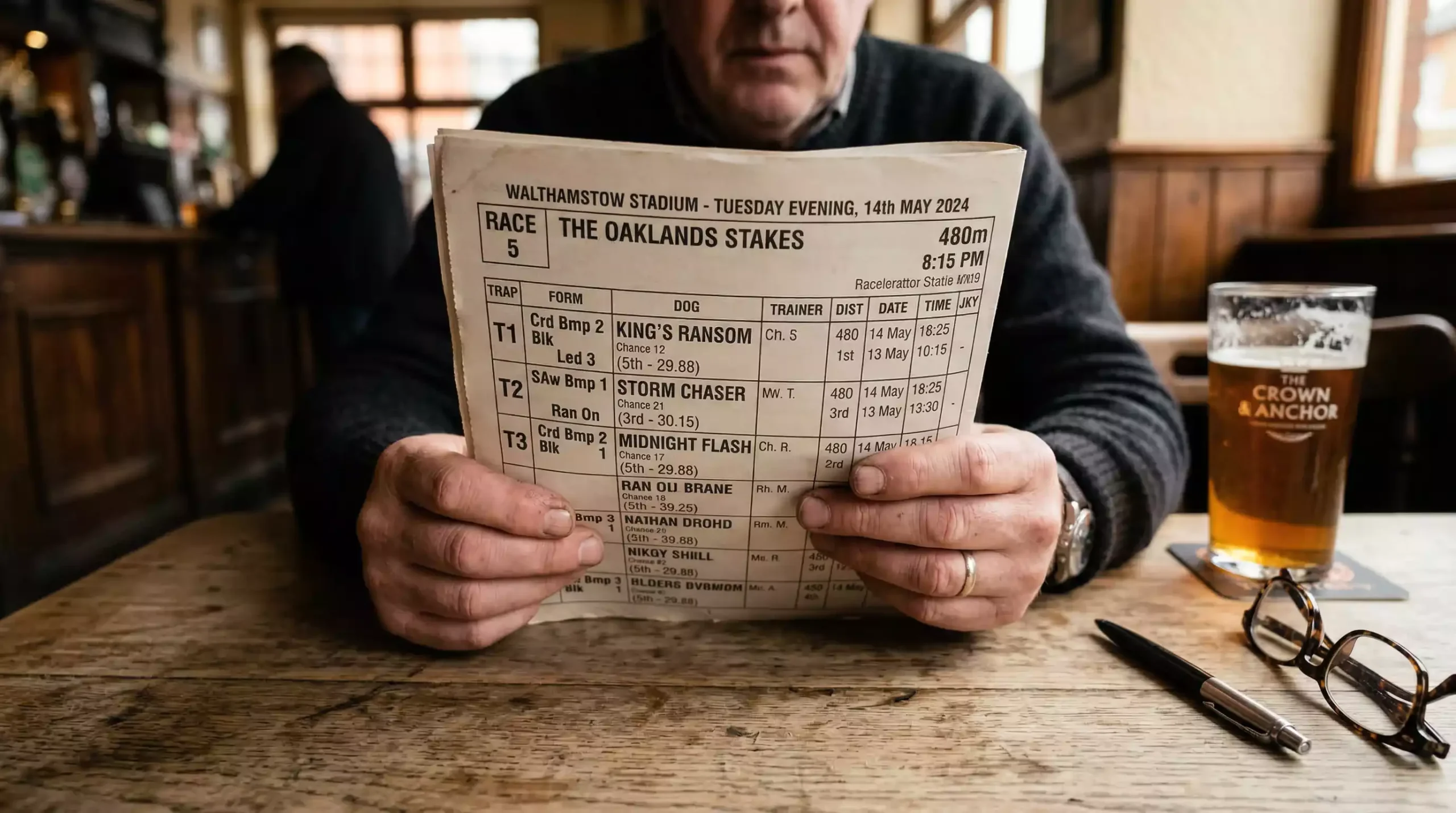
Crack the code. Open any greyhound racecard and you encounter a shorthand language developed over decades to compress complex racing information into minimal space. Crd, Bmp, Ck, SAw—these abbreviations describe what happened during a race in ways that matter for future selections. Miss them and you miss crucial context. Learn them and form analysis becomes substantially more informed.
The volume of races generates the need for compression. In 2024, GBGB-licensed tracks recorded 355,682 individual race runs across their 21 venues, each producing remarks that explain the running of every dog. Of those runs, 3,809 resulted in injuries requiring veterinary attention—events documented through the same abbreviated notation system. Officials watching each race note interference, positioning troubles and exceptional circumstances. These observations become abbreviated comments that follow dogs through their form records, telling stories that bare finishing positions cannot.
Interference Abbreviations
Racing involves six dogs pursuing an artificial hare around a relatively narrow track. Contact happens. The abbreviations describing interference form the largest category in racecard shorthand, and understanding gradations matters. Not all trouble is equal—a minor brush affects outcomes differently than being knocked sideways at the first bend.
Crd stands for crowded. This describes a dog squeezed between rivals with insufficient racing room, typically affecting forward momentum without causing dramatic disruption. A dog marked Crd halfway through a race lost ground to interference but may not have been stopped entirely. The abbreviation signals compromised running without specifying severity. Multiple Crd remarks in recent form suggests a dog prone to finding trouble or racing in congested positions.
Bmp means bumped—physical contact with another dog. This is more significant than crowding, implying actual collision rather than mere proximity. A dog Bmp at the first bend typically loses more ground than one simply Crd mid-race. Where the bump occurred matters: Bmp1 indicates first bend interference, while Bmp3 points to third bend trouble. Reading bump patterns reveals whether a dog habitually races in dangerous positions or suffered isolated misfortune.
Ck denotes checked—a dog forced to shorten stride or change direction to avoid collision. This is serious interference, usually costing more ground than bumping because the dog anticipates trouble and adjusts rather than absorbing contact. A checked dog sacrifices momentum deliberately; a bumped dog loses it involuntarily. Both matter, but checking suggests a potentially greater impact on finishing position.
Badly Bmp or Badly Ck amplifies the standard abbreviations, indicating severe interference that significantly affected the race outcome. These remarks appear less frequently but carry substantial weight in form assessment. A dog finishing fifth after being badly bumped at the first bend may have been winning without interference. The abbreviation flags this possibility for punters reviewing the form.
Fell and KnO represent the extreme end of interference. A dog that fell hit the track surface; one knocked over was brought down by collision with another runner. Both end the dog’s race and typically trigger mandatory rest periods before further racing. Reviewing form for fell or knockover patterns reveals dogs at higher injury risk, information relevant both to welfare concerns and betting calculations.
Start and Pace Abbreviations
How a dog leaves the traps shapes everything that follows. Start abbreviations describe the crucial first moments from box to bend, where races are often won and lost. Sheffield’s run to the first bend—approximately 60.5 metres—provides barely enough time to establish position before dogs converge on the turn.
SAw means slow away. The dog left the traps tardily, either through hesitation, mistiming or interference at the start. A habitual slow beginner carries SAw remarks throughout its form, suggesting a dog that needs racing room to recover lost ground rather than one expecting to lead. At Sheffield, where inside traps offer first-bend advantage, SAw from trap one often proves more damaging than from wider boxes where racing room exists.
QAw indicates quick away—the opposite scenario. A dog showing consistent QAw remarks from various traps possesses genuine early pace independent of starting position. These are dogs likely to reach the first bend in prominent positions, valuable especially from inside draws where they can establish rail position and defend it through the race.
Led describes a dog that led at some point during the race. EP indicates early pace—strong running through the initial sections without necessarily leading. These remarks help identify running styles. A dog marked Led repeatedly is a front-runner; one showing EP without Led pushes the pace without taking responsibility for making it. Both patterns inform tactical assessments of how prospective races might unfold.
Rls appears when a dog railed—ran close to the inside rail through some portion of the race. This is generally positive positioning, covering less ground than dogs racing wide. A dog switching from wide running to railing as form develops shows tactical improvement. Conversely, W denotes wide running, covering extra distance and typically requiring superior raw speed to compensate.
Position and Track Abbreviations
Beyond interference and pace, position abbreviations describe where dogs raced and how they moved through the field. These remarks explain journeys through the race that finishing positions alone cannot capture. A dog finishing third after racing wide throughout outperformed a third-place finish achieved by tracking the leaders throughout.
MvdUp means moved up—the dog gained positions during the race. This indicates either sustained running or opportunities created by others’ troubles. A dog consistently marked MvdUp in the home straight finishes races strongly regardless of early position. At Sheffield’s 480-metre standard distance, this suggests stamina for the trip and a running style that builds through races rather than front-running.
Fdd indicates faded—the dog lost positions through the race. Repeated Fdd remarks expose stamina limitations or a dog unable to sustain early speed. When analysing form for Sheffield’s longer distances—660 metres, 720 metres or staying trips—Fdd patterns at standard distances suggest dogs likely to struggle further.
RnOn means ran on—continued running to the line despite not winning. This typically describes a dog finishing well without threatening the principals. Context determines interpretation: RnOn in a strongly-run race suggests competitive performance, while RnOn in a slowly-run event may indicate limited acceleration to pick off tired leaders.
FinStr denotes finished strongly—a more emphatic version of running on that implies genuine finishing speed. Dogs marked FinStr regularly possess turn of foot that can be decisive when racing unfolds suitably. Identifying FinStr dogs in races likely to feature strong early pace provides betting opportunities when prices undervalue their finishing capabilities.
Complete A-Z Reference
Beyond the common abbreviations already explored, comprehensive glossaries list dozens of additional codes. Some appear frequently; others describe situations arising occasionally in unusual race circumstances.
AwkBnd indicates an awkward bend—trouble negotiating one of the turns without specific interference from another runner. BlkdRn describes a blocked run where forward progress was impeded by another runner’s positioning without physical contact. BmpStr means bumped and unsighted—temporarily losing sight of the hare after collision. Each abbreviation captures specific circumstances that official observers deemed relevant.
Dis means disqualified—the dog’s finishing position was removed, typically for interference with another runner judged severe enough to affect the result. Void marks races declared non-events, usually due to hare malfunction or other mechanical failure. NTrls indicates no trial—a dog running without recent trial performance, relevant for returns from layoff.
Veterinary abbreviations provide health context. Lame indicates a dog moved with visible gait abnormality. InSsn marks a bitch in season, explaining any unusual behaviour or performance. ShdTp describes a shoulder tip—contact affecting the shoulder—while HkTp indicates hock tip, an injury to the rear lower leg.
The full catalogue runs to dozens of codes, but mastering the core abbreviations covering interference, pace and position provides sufficient literacy for competent form reading. Additional abbreviations can be learned as they appear in practice. Sheffield racecards, like all GBGB venues, use standardised coding that transfers directly to any other licensed track. Learn the language at Owlerton and you speak it everywhere greyhound racing runs in Britain.
Greyhound Racecard Abbreviations — More on this topic at sheffield dogs results.
See also UK Greyhound Racing Law.
