
Best Greyhound Betting Sites – Bet on Greyhounds in 2026
Loading...
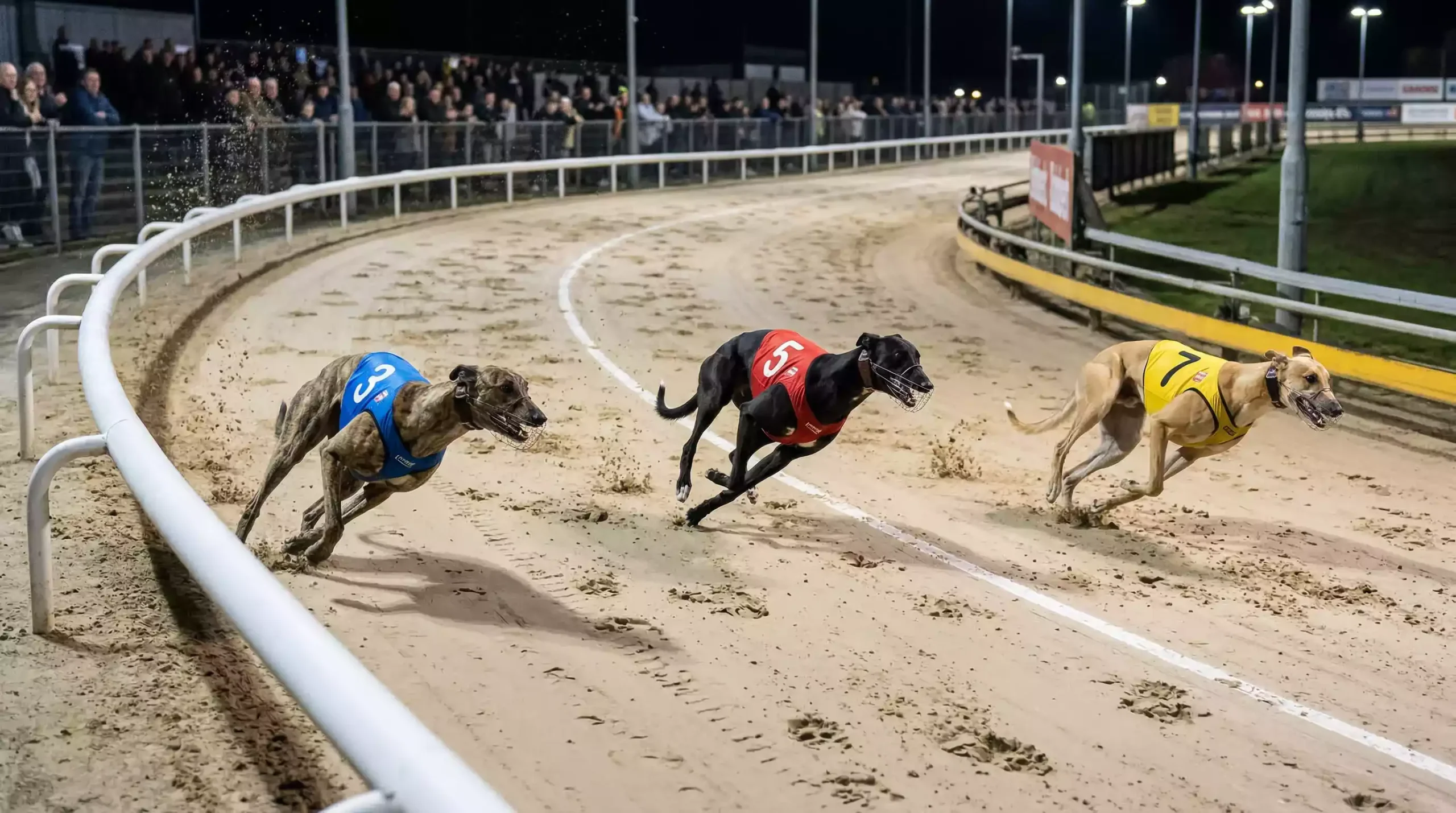
Find your line. Every greyhound develops preferences about where it wants to run on a track. Some hug the inside rail as if their lives depend on it. Others swing wide around bends, covering extra ground to avoid congestion. A third group adapts to circumstances, finding space wherever it appears. These running styles are not random quirks. They reveal something fundamental about how individual dogs approach racing.
At Sheffield’s 425-metre circuit, running style interacts directly with trap draw to shape race outcomes. The track attracts over 300,000 visitors annually, making it one of the busier venues where understanding these dynamics pays consistent dividends. A committed railer drawn in trap six faces a different challenge than one starting from trap one. Similarly, a wide runner stuck on the inside might spend the entire race trying to find room to move to its preferred path. Understanding these dynamics helps you spot dogs likely to encounter trouble and those positioned to exploit their natural tendencies.
This guide examines the three primary running styles, explains how each operates, and shows how to match style against trap position when analysing Sheffield racecards. The patterns are consistent enough to be predictive, which is precisely what makes them worth studying.
Railers: Hugging the Inside
Railers gravitate toward the inside rail and stay there throughout a race. This style develops partly from instinct and partly from early racing experiences. A young dog that finds success running the shortest path often reinforces that behaviour until it becomes ingrained. The rail becomes home, and any attempt to move the dog wider meets resistance.
The advantage of railing is geometric. The inside line around a bend covers less distance than any other path. On Sheffield’s bends, the difference between hugging the rail and running three feet wide might be several metres over a complete circuit. At racing speed, those metres translate into significant time. A committed railer running clear of interference should beat an equally fast dog taking a wider route.
The disadvantage emerges when interference occurs. Railers stuck behind slower dogs have limited options. Moving off the rail to pass means abandoning the preferred path and running extra ground. Many railers refuse to make that move, preferring to wait for a gap that might never appear. They sacrifice winning chances rather than compromise their running style.
Identifying railers from racecard data involves checking remarks and running positions. Phrases like Rls (rails) appearing consistently in past performances indicate a dog that stays inside. First-bend reports showing the dog challenging for the rail position from wider traps also suggest railing tendencies. Some racecards explicitly note running style, though this varies by data provider.
Railers perform best when drawn inside. Trap one suits them perfectly, providing immediate access to the rail with no crossing required. Trap two works nearly as well. Beyond that, the dog must either break fast enough to claim the rail ahead of rivals or accept running further from its preferred line. Trap six rarely suits a true railer. The dog spends the race trying to reach a position it should have started from.
Watch railers carefully when two or more compete in the same race. If traps one and two both hold railers, expect early congestion as they battle for the same piece of track. Neither wants to yield, and both might suffer interference as a result. Sometimes the inside traps create their own problems precisely because multiple dogs want the same running line.
Wide Runners: The Outside Path
Wide runners take the opposite approach. These dogs sweep around bends on the outside, accepting additional distance in exchange for clear running room. Where railers tolerate congestion to maintain position, wide runners tolerate extra ground to avoid trouble. Each style involves trade-offs. Wide running sacrifices geometry for freedom.
The wide path works particularly well for dogs with sustained pace. A greyhound that maintains speed through bends rather than accelerating briefly and fading can absorb the extra distance without losing position. These dogs often come from behind, using the wide run to pass rivals who cut corners but lack the stamina to hold off a sustained challenge.
Sheffield’s Outside Swaffham hare influences wide running somewhat. Dogs chasing the hare sometimes find the outside path more natural because it aligns with the hare’s position through bends. Whether this represents genuine tactical thinking or simple prey drive remains debatable. The effect, however, appears in running patterns that favour the wider route.
Identifying wide runners involves the same process used for railers, but seeking opposite evidence. Remarks showing Wide appearances, running positions consistently away from the rail, and patterns of late challenges from off the pace all suggest wide-running tendencies. Some dogs switch between styles depending on draw, but true wide runners show consistent preference for the outside path regardless of starting position.
Trap draw affects wide runners less severely than railers, but positioning still matters. Trap five or six provides immediate access to the outside line without fighting through traffic. Inside draws require the dog to cross the pack before reaching preferred running room, which introduces interference risk and costs time. A wide runner from trap one faces an awkward choice: fight for the rail against its instincts or surrender early position to reach the outside.
Wide running performs best over longer distances where the extra ground matters less relative to total race distance. On Sheffield’s sprint trips of 280 and 362 metres, wide running rarely succeeds because the race ends before the style’s advantages emerge. Over 660 metres or beyond, wide runners often prevail because their sustained pace outlasts rivals who took the shorter path but could not maintain it.
Middle Trackers: The Flexible Option
Middle trackers occupy the ground between railers and wide runners. These dogs run neither hard against the rail nor consistently wide. They find space where it exists, adapting their path to race circumstances rather than imposing a fixed preference on every situation. Flexibility is their defining characteristic.
The middle-tracking style proves difficult to pin down precisely because it lacks the commitment of the alternatives. A dog might run middle track in one race and drift wider in the next, depending on where rivals positioned themselves. This adaptability makes middle trackers harder to predict but also harder to hinder. They escape the specific vulnerabilities that plague railers drawn wide or wide runners drawn inside.
Identifying middle trackers often involves noting the absence of strong patterns rather than the presence of consistent behaviour. If a dog’s past performances show varying running positions without obvious preference, middle tracking is the likely explanation. These dogs rarely appear in remarks as either Rls or Wide because they run neither line consistently enough to warrant the notation.
From middle traps, these dogs face minimal adjustment problems. Trap three or four positions them centrally, with options to move inside or outside depending on how the race develops. They can follow clear running wherever it appears without fighting against their own instincts. This versatility sometimes makes middle-trap draws ideal for adaptable dogs, even though conventional wisdom focuses heavily on inside advantages.
Middle trackers often benefit when races develop chaotically. While committed railers and wide runners follow their preferred paths into trouble, middle trackers can spot gaps and exploit them. The flexibility that makes them less predictable also makes them more resilient to race-day interference. They might not have the perfect path in mind, but they have several acceptable alternatives available.
Matching Style to Trap at Sheffield
Practical application of running style analysis at Sheffield starts with identifying each runner’s preference and then assessing how well tonight’s trap draw suits that preference. The interaction produces upgrade and downgrade candidates that raw form alone might not reveal.
Begin by reviewing recent racecard remarks for every runner. Note which dogs consistently show railing behaviour, which swing wide, and which adapt without clear pattern. Then map those tendencies against trap positions. A railer in trap one gets a mental upgrade. The same dog in trap five gets downgraded because it must work against its instincts to reach preferred running room.
Sheffield’s 60.5-metre run to the first bend compresses these dynamics. Dogs have limited time to establish position before the bend arrives. A wide runner from trap two might not clear the pack before the turn, forcing it to check off rivals or take the bend on an unfamiliar inside path. That scenario suggests trouble regardless of the dog’s underlying ability.
Consider what happens when styles clash. Two railers from adjacent inside traps create congestion. A railer drawn inside a confirmed wide runner might find clear passage as the wide runner drifts out. A middle tracker between two strong-running railers might get squeezed from both sides. These collision scenarios follow predictably from running style assessment and trap position.
Sheffield’s nine distances add another layer to the analysis. Sprints favour early speed over running style because races end before styles fully express themselves. Middle distances allow styles to matter more. Staying trips over 660 metres give wide runners time to recover ground lost by taking longer routes. Match the dog’s style not only to tonight’s trap but also to tonight’s distance, and the picture sharpens further.
No analysis guarantees outcomes. Dogs sometimes abandon their usual patterns, breaks go badly, and interference happens unpredictably. Running style assessment improves your probability estimates rather than providing certainties. A railer from trap one should find clear running more often than the same dog from trap six. Over dozens of races, that tendency produces measurable results. For any single race, it remains one factor among several that shape eventual outcomes.