
Best Greyhound Betting Sites – Bet on Greyhounds in 2026
 Available in US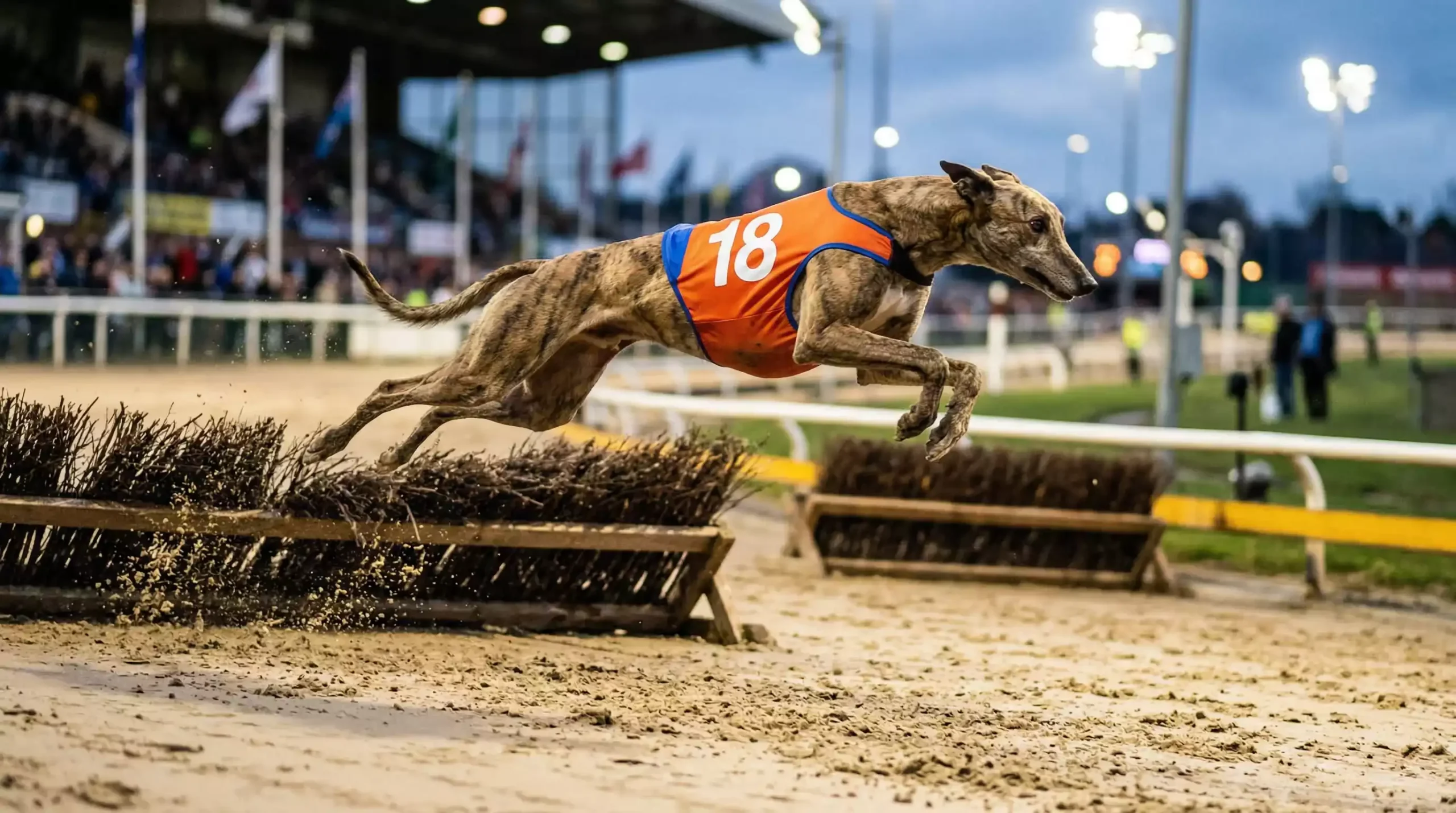
Hurdle racing adds a vertical dimension to greyhound competition. Dogs must clear obstacles while maintaining racing pace, combining the physical demands of standard racing with the technical challenge of jumping. Sheffield’s 500-metre hurdle events test abilities that flat racing cannot assess. Some dogs take to hurdles naturally, clearing obstacles with fluid efficiency. Others struggle with the additional complexity regardless of their flat-race credentials, losing positions at each jump.
The hurdle code occupies a specialist position within British greyhound racing. Fewer tracks offer hurdle events than flat racing, and the pool of dedicated hurdlers remains smaller than the general racing population. This specialisation creates betting opportunities for those who understand hurdle dynamics, but it also demands respect for the additional risks that jumping introduces. Over the sticks represents a discipline unto itself.
How Hurdle Racing Works
Hurdle races at Sheffield use standardised obstacles positioned around the track. Dogs must clear these hurdles while racing, losing momentum with each jump and requiring both technique and courage to compete effectively. The hurdles stand at regulated heights designed to test jumping ability without creating unreasonable danger, though the physical demands exceed those of flat racing.
The jumping action differs from horse racing steeplechase despite superficial similarities. Greyhounds do not tuck their legs and arc over obstacles. Instead, they bound upward and forward, clearing hurdles with extension rather than elevation. Dogs that jump efficiently lose minimal speed. Those that scramble or hesitate at obstacles fall behind regardless of their raw pace.
Races unfold differently than flat events because hurdles create bunching points. Dogs arrive at obstacles together, jump, and separate based on jumping efficiency. Strong jumpers gain ground at each hurdle. Weak jumpers lose positions progressively. By the finish, accumulated jumping advantages translate to significant margins.
Technical assessment matters more in hurdle racing than flat competition. A dog’s time reveals overall performance but obscures how that time accumulated. Two dogs finishing in identical times may have run very different races: one smooth and efficient, another scrambling but determined. Future performances favour the smooth jumper because technique proves more consistent than determination across multiple races.
Training for hurdles requires specific preparation beyond flat racing work. Dogs must learn to judge obstacles, time their takeoffs, and maintain rhythm through multiple jumps. This education takes time and not all dogs master it. Natural jumpers exist, but even talented dogs require practice to optimise their technique.
Sheffield’s 500mH Specifics
Sheffield’s 500-metre hurdle event covers the same ground as the standard 500-metre flat race but with hurdles positioned along the course. Razldazl Raidio holds the track record at 28.96 seconds, set in April 2017. This time exceeds the flat 500-metre record of 28.27 by less than a second, demonstrating that elite hurdlers lose minimal time to obstacles.
The difference between hurdle and flat times varies considerably between dogs. Efficient jumpers add fractions to their flat times. Inefficient jumpers add seconds. Comparing a dog’s hurdle times with its flat performances over similar distances reveals jumping quality more clearly than raw hurdle times alone.
Sheffield schedules hurdle races less frequently than flat events, treating them as specialist programming rather than standard fare. The relative scarcity means fewer opportunities to assess form and longer gaps between competitive appearances for regular hurdlers. Form from previous hurdle starts carries significant weight because recent flat form may not indicate hurdle readiness.
Track familiarity matters for hurdlers. Dogs that have jumped Sheffield’s obstacles previously understand the specific setup: hurdle positions, approach angles, and landing areas. First-time hurdlers at the track face learning curves that experienced Sheffield jumpers have already navigated. Prior course experience represents genuine advantage in hurdle events.
The 500-metre hurdle trip combines standard-distance racing demands with jumping requirements. Dogs need enough stamina to complete the course while also possessing the athleticism to clear obstacles. Neither pure sprinters nor pure stayers dominate. The best hurdlers show balanced abilities across racing fundamentals plus natural jumping talent.
Identifying Hurdle Specialists
Hurdle specialists display consistent jumping form across their careers. Their times remain stable relative to flat performances, indicating reliable technique rather than lucky clearances. They approach hurdles with confidence, neither rushing nor hesitating before obstacles. Their rhythm through jump sequences suggests practised efficiency.
Previous hurdle form provides the clearest evidence of specialist ability. Dogs with multiple hurdle wins demonstrate proven competence over obstacles. Those with consistent placed finishes show they handle hurdles even when not winning. First-time hurdlers represent unknowns regardless of flat ability. Some exceptional flat dogs fail over hurdles due to jumping difficulties. The gap between flat and hurdle form often surprises those who assume running ability transfers directly.
Trainers develop hurdle specialists deliberately. Kennels with strong hurdle records produce dogs prepared for jumping competition through systematic training. Following these trainers’ entries identifies runners likely suited to obstacles. Dogs entering hurdles from trainers without hurdle traditions face steeper learning curves. The preparation difference shows clearly in how dogs approach their first obstacles.
Physical characteristics suggest jumping potential though not conclusively. Athletic builds with strong hindquarters support jumping efforts. Dogs that carry their weight efficiently maintain better form through jump sequences. Larger dogs sometimes struggle with the agility required for clean clearances. Lighter frames often produce more efficient jumping actions. Observing dogs during parade can suggest athletic suitability even before jumping begins.
Watch for dogs transitioning between flat and hurdle racing. Successful flat dogs sometimes discover hurdle talent when given opportunities. Struggling flat dogs occasionally find their niche over obstacles where jumping skill compensates for ordinary pace. These transitions create opportunities at generous odds before markets adjust to demonstrated ability. The uncertainty surrounding code switches produces mispriced runners regularly.
Risks and Considerations
Hurdle racing carries inherent risks beyond those of flat competition. Jumping obstacles at speed creates potential for falls, collisions, and injuries that flat racing cannot produce. Dogs must make split-second decisions while airborne, with limited ability to correct mistakes mid-jump. The physical demands stress different structures than flat running.
UK greyhound racing maintains an overall injury rate of 1.07 percent across all race types. Hurdle races contribute to this figure alongside flat events. The specific injury profile of hurdle racing differs from flat racing: jumping-related injuries feature more prominently, while running injuries remain similar. Understanding these distinctions helps assess risk profiles for individual dogs.
Experienced hurdlers develop techniques that minimise risk. They learn optimal takeoff points, appropriate jump heights, and efficient landing positions. This expertise protects against common jumping errors. Inexperienced hurdlers face higher risk profiles because they have not developed these protective habits. The learning period involves elevated exposure to jumping incidents.
From a betting perspective, hurdle risks introduce additional uncertainty. A dog capable of winning may fall or stumble at an obstacle, losing positions that flat racing would not forfeit. This volatility affects expected value calculations. Odds should reflect not just finishing probability but also completion probability. Markets sometimes underprice these risks.
Welfare considerations accompany hurdle racing more prominently than flat events. Responsible punters may factor injury risks into their engagement with hurdle markets. The code continues operating within regulated frameworks, but its future depends partly on demonstrating acceptable welfare outcomes. Over the sticks remains an acquired taste for dogs and observers alike.
Sheffield Hurdle Racing — More on this topic at sheffield dogs results.
See also Best Odds Guaranteed.
