
Best Greyhound Betting Sites – Bet on Greyhounds in 2026
Loading...
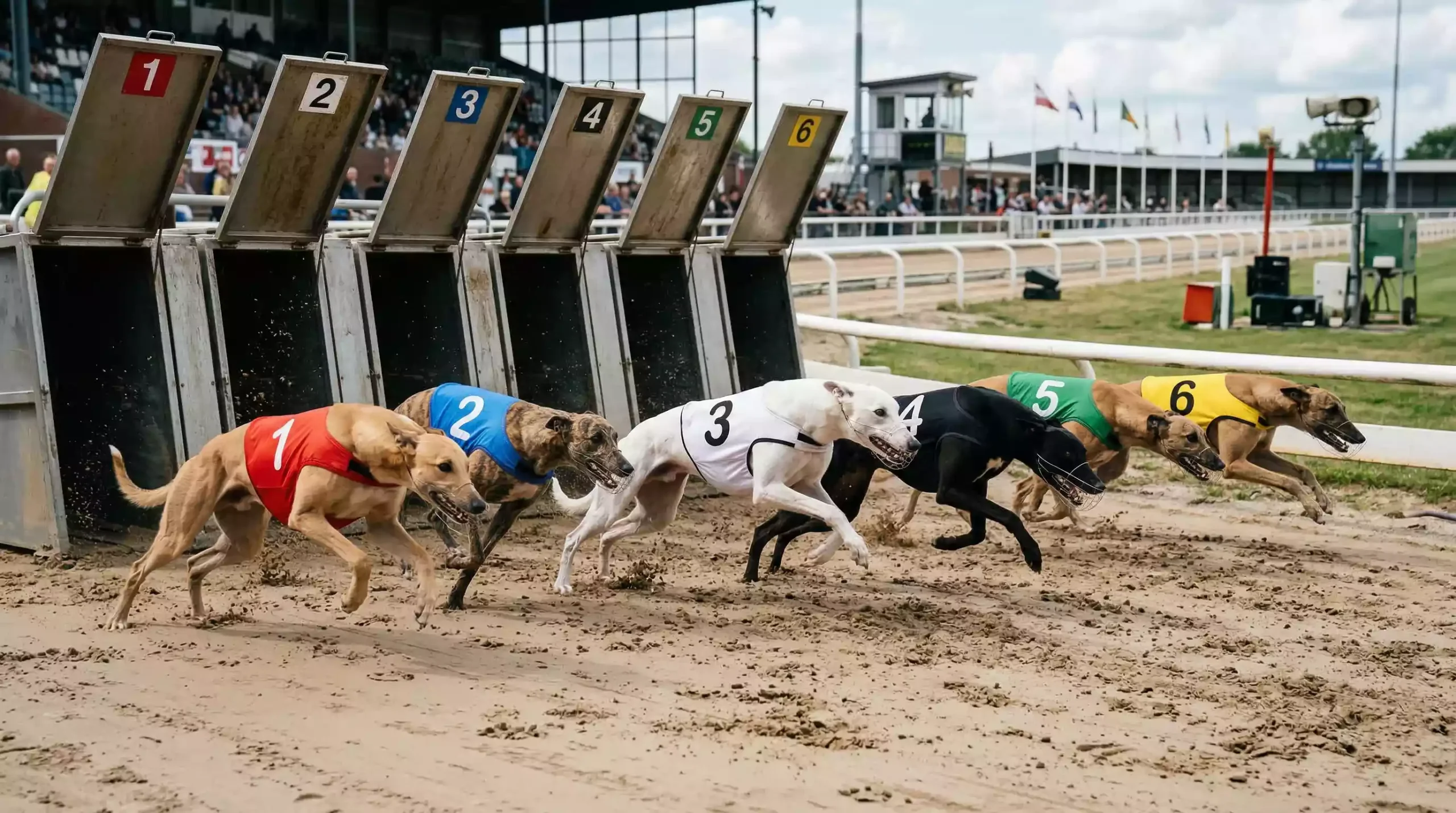
Sprint races end before most greyhound events really begin. The 280-metre and 362-metre distances at Sheffield demand explosive speed and immediate acceleration. There are no second chances, no opportunities to recover from a slow start, no tactical options beyond getting out fast and staying clear. Everything happens in seconds. Blink and you miss the entire race.
This brevity appeals to certain punters while frustrating others. Sprints reward dogs that break sharply from the traps and maintain their speed through a single bend or slightly more. Form analysis matters less than in longer races because so little can happen during the running. Trap draw becomes paramount. The geometry of Sheffield’s track amplifies these effects, creating predictable patterns that savvy bettors learn to exploit.
280m: The Shortest Trip
Two hundred and eighty metres covers approximately two-thirds of a lap at Sheffield. The dogs burst from the traps, negotiate a single bend, and sprint toward the winning line. The entire race typically lasts under sixteen seconds. Coolavanny Galiv holds the track record at 15.65 seconds, set in April 2022. That time translates to an average speed exceeding 64 kilometres per hour.
At this distance, trap speed matters more than anything else. A dog that breaks a length clear in the first fifty metres often wins regardless of its rivals’ abilities because there simply is not enough track remaining for faster dogs to close the gap. The run to the first bend at Sheffield measures approximately 60.5 metres, meaning dogs reach the turn before full racing speed develops. Whatever order they enter that bend usually determines the outcome.
The 280-metre trip suits specialist sprinters with exceptional early pace. These dogs may struggle over longer distances where stamina and racing intelligence matter more, but they dominate short races through sheer acceleration. Trainers identify sprint potential early in a dog’s career and develop it accordingly. A greyhound that shows explosive trap speed during trials rarely transitions to staying trips.
Punters approaching 280-metre races should focus on three factors: trap draw, recent trap times, and consistency of early breaks. A dog that has led to the first bend in three of its last four races deserves consideration regardless of finishing positions. Conversely, a technically superior dog drawn wide faces an uphill battle against inside runners that need only maintain their early advantage for a few seconds.
Races at this distance sometimes produce unusual results because the margin for error is minimal. A marginally slow break can cost three or four lengths that prove irrecoverable. For this reason, shorter odds on sprint races rarely reflect true value. The unpredictability cuts both ways.
362m: One Bend Sprint
The 362-metre distance adds roughly eighty metres to the shortest sprint, but the racing dynamics remain similar. Dogs still require exceptional early pace to lead into the first bend. The additional ground beyond that turn provides slightly more opportunity for runners to find positions and apply pressure, but leaders typically maintain their advantage through to the line.
Farloe Bubble set the 362-metre track record at 20.82 seconds in October 1997. That time has stood for nearly three decades, making it Sheffield’s oldest surviving record. The longevity suggests either Farloe Bubble produced something extraordinary or the distance appears infrequently enough on Sheffield cards that serious record attempts remain rare. Both explanations likely contain truth.
The extra ground compared to 280 metres introduces a second phase to the race. After negotiating the first bend, dogs face a sustained run toward the finish. This phase rewards those with genuine speed rather than just sharp trap breaks. A dog that exits the bend in second place can sometimes overhaul a tiring leader if the finishing straight allows acceleration. This possibility creates betting opportunities on dogs with strong finishing sectionals.
Form analysis for 362-metre races benefits from examining how dogs perform after the first bend. Sectional times, where available, reveal whether a greyhound maintains speed through the race or fades after an early effort. Consistent finishers deserve more confidence than dogs whose times suggest they tire in the closing stages.
The 362-metre trip functions as a bridge between pure sprinting and standard racing. Dogs that excel here may possess either elite sprint speed with reasonable stamina or standard speed with exceptional early pace. Distinguishing between these types helps predict whether a runner will handle step-ups in distance or remain a specialist.
Trap Draw Dominance in Sprints
Sheffield’s track geometry creates pronounced trap bias in sprint races. The 425-metre circumference and relatively tight bends mean inside runners take shorter paths than outside rivals. Over 280 or 362 metres, this difference translates directly to time saved. A dog in trap 1 travelling the minimum distance beats an equally fast dog in trap 6 covering the longer outside line.
Statistics consistently show traps 1 and 2 outperforming wider boxes at sprint distances. The advantage is not marginal. Over large sample sizes, inside traps produce win rates substantially above the 16.7 percent that random distribution would predict. Trap 6 and sometimes trap 5 correspondingly underperform. Punters ignoring these patterns sacrifice edge.
The mechanism behind trap bias involves bend geometry and crowding dynamics. Dogs drawn inside take tighter lines through turns, covering less ground. They also face less interference because the rail prevents rivals from challenging on their inside. Wide runners must either swing around traffic or accept boxing in behind leading dogs. Neither outcome favours their chances.
Sprint races amplify these effects because there is insufficient distance for corrections. A dog drawn wide might overcome trap bias over 500 metres by gradually working into position. Over 280 metres, no such opportunity exists. The race ends before wider runners can compensate for their initial positional disadvantage.
Sensible sprint betting starts with trap analysis before form assessment. A dog with modest form drawn in trap 1 often represents better value than a superior dog drawn in trap 6. The form difference may indicate one dog is faster, but the trap difference determines which dog actually reaches the first bend in front. Speed means nothing if position is sacrificed before it matters.
Identifying Sprint Specialists
Sprint specialists share recognisable characteristics. They break quickly from the traps, reaching racing speed before rivals. They maintain that speed through the first bend without checking or changing stride. They possess the physical attributes—typically lighter frames and powerful hindquarters—that favour explosive acceleration over sustained running.
Racecards reveal sprint potential through several indicators. Look for dogs whose form figures show consistent early positions: 1-1-1-2-1 suggests a leader type regardless of whether they always converted those leads to wins. Sectional times to the first bend, where published, identify dogs that consistently reach the turn before others. Trap times from trials provide additional data on raw acceleration.
Trainers often specialise their kennels, producing dogs suited to particular distances. Certain trainers build reputations for preparing quick breakers suited to sprint races. Following their entries at 280 and 362 metres can identify runners with pedigrees and conditioning designed for short trips. These dogs appear at sprint distances because their connections believe that is where they excel.
Watch also for dogs transitioning between distances. A greyhound that has run 480 metres without distinction might thrive when dropped to sprints if its early pace exceeds its stamina. Conversely, a sprint specialist asked to extend typically struggles once superior rivals run past it in the closing stages. Distance changes in recent form often signal trainer intentions about where a dog belongs.
The best sprint specialists combine every favourable factor: natural speed, sharp trap technique, appropriate physique, and experienced handling. When such dogs draw inside traps, they become formidable betting propositions. Everything ends in seconds. Over in seconds—precisely why these races reward preparation and punish guesswork.