
Best Greyhound Betting Sites – Bet on Greyhounds in 2026
Loading...
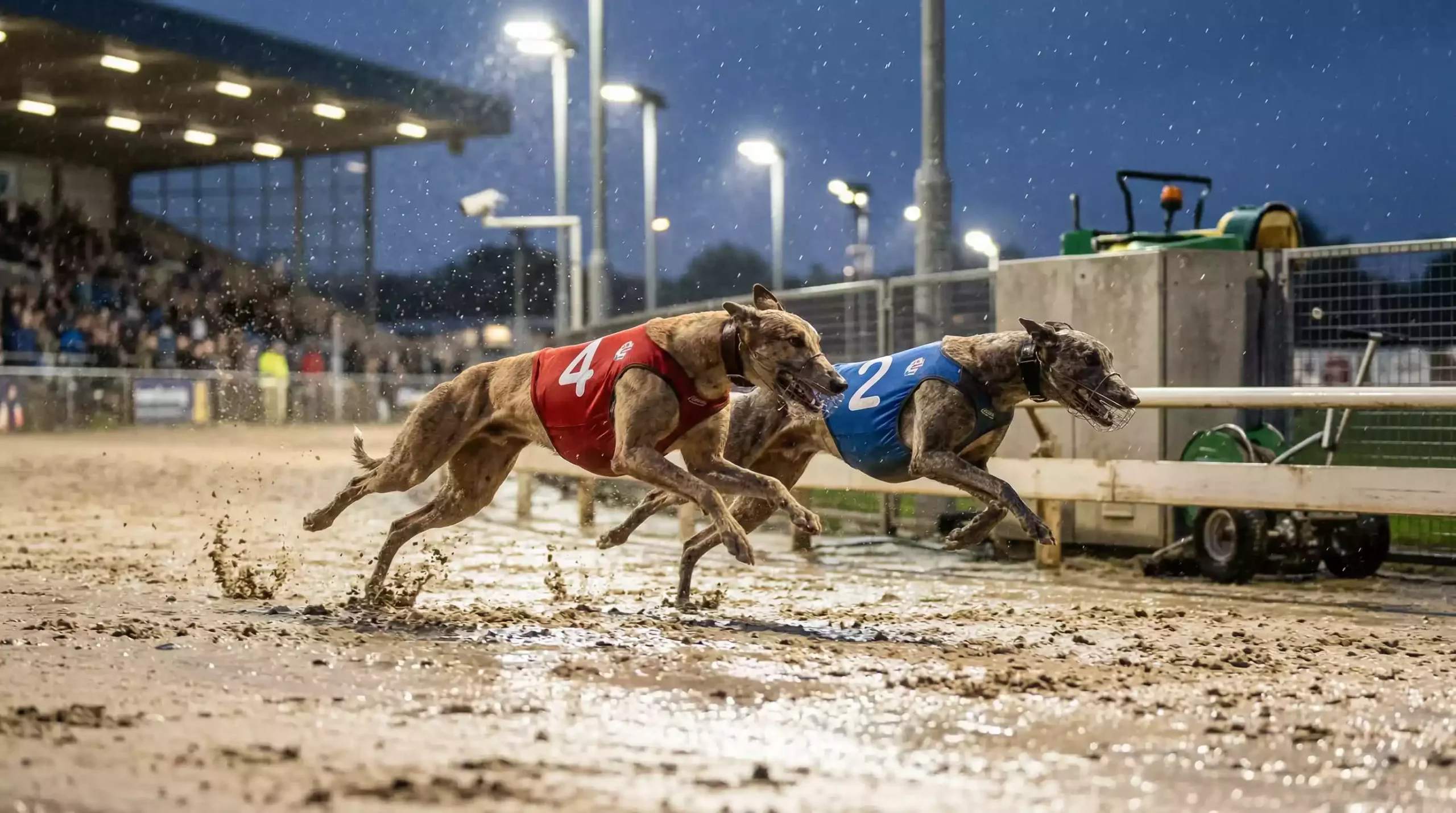
Read the conditions. Weather affects greyhound racing in ways that go beyond the obvious inconvenience of watching from the stands in a downpour. The track surface changes with rainfall, temperature, and humidity. Dogs that thrive on fast ground might struggle when conditions turn heavy. Others seem to improve when the surface rides slower. Ignoring these factors leaves information on the table.
Sheffield’s sand track responds predictably to weather changes once you understand the underlying mechanics. The 425-metre circuit drains reasonably well, but sustained rain alters running times across the entire card. With UK greyhound racing generating approximately £1.5 billion in betting turnover annually, understanding every factor that affects race outcomes becomes more than academic interest. Temperature shifts affect grip and pace. Seasonal variations introduce patterns that repeat year after year for attentive form students.
This guide explains how weather impacts Sheffield racing, what to look for when conditions deteriorate or improve, and how to adjust your analysis accordingly. The clock times you compare between races only make sense when you account for the conditions under which they were recorded.
Sand Track Characteristics
Sheffield operates on a sand surface, the standard for UK greyhound racing. Sand offers several advantages over alternative surfaces. It provides reasonable cushioning to reduce injury risk, drains better than grass when rain falls, and can be maintained and groomed relatively easily between race meetings. The specific sand mixture at each track varies, producing slightly different running characteristics even between venues using nominally identical surfaces.
Moisture content determines how sand performs on race day. Dry sand shifts under paws, making traction more difficult and often producing slower times as dogs work harder to push off. Moderately damp sand compacts well, offering firm footing and typically producing the fastest times. Heavily saturated sand becomes loose and deep, again slowing times and demanding more effort from runners. The sweet spot lies somewhere in between, and track staff work to maintain optimal conditions through watering and drainage management.
Sheffield’s track maintenance crew prepares the surface before each meeting. Between races, harrowing equipment breaks up compacted areas and redistributes sand to maintain consistent depth around the circuit. This work explains why track conditions can change even within a single race meeting. Early races might run on slightly different going than later contests as maintenance responds to how the surface wears.
Dogs develop preferences for particular surface conditions, just as horses do on turf. Some greyhounds perform best on fast, firm sand. Others seem more comfortable when the track rides a bit slower. These preferences emerge from physical characteristics, stride patterns, and sometimes simply from what the dog experienced during early training. Recognising which dogs prefer which conditions adds another dimension to form analysis.
The Outside Swaffham hare used at Sheffield runs on a rail outside the track perimeter. The sand surface extends consistently around the running path, but dogs chasing the hare sometimes drift toward the outside where the surface might compact differently from heavily trafficked inside lines. These micro-variations rarely determine race outcomes but can influence marginal decisions when everything else appears equal.
Rain and Wet Conditions
Yorkshire weather being what it is, Sheffield frequently races on wet tracks. Rainfall before or during a meeting changes the surface significantly, and understanding those changes helps you interpret the times being recorded.
Light rain typically improves track speed initially. The moisture binds sand particles together, creating firmer footing. Dogs push off more efficiently, and times often improve compared to bone-dry conditions. This phenomenon explains why some track records fall on evenings when rain arrived earlier in the day and then stopped. The surface enjoyed the benefits of moisture without becoming waterlogged.
Sustained heavy rain produces the opposite effect. Once saturation exceeds a certain threshold, the sand becomes loose and heavy. Dogs sink slightly deeper with each stride, expending more energy to cover the same distance. Times slow across the board, sometimes dramatically. A dog that ran 28.30 on fast ground might struggle to break 28.80 on a flooded track. Both times reflect the same level of ability, just expressed under different conditions.
Drainage capability varies by track section. Areas that pool water or drain slowly might ride heavier than well-drained sections. Dogs taking particular racing lines through these softer patches lose more momentum than rivals finding firmer footing. Sometimes the inside rail rides worse than the outside, or vice versa, depending on track camber and drainage infrastructure.
Official going descriptions attempt to communicate track state. Terms like fast, standard, slow, and heavy appear on racecards and results. Sheffield’s racing secretary assesses conditions before racing and updates the going report as conditions change. These descriptions provide rough guidance but cannot capture every nuance. The going might officially be slow while certain sections ride faster than others. Ground truth comes from watching early races and noting how times compare to standard benchmarks.
Wet tracks also affect injury risk. Softer surfaces generally cushion impact better, potentially reducing some injury types. However, slippery conditions through bends can cause dogs to lose footing, introducing different risks. Track staff monitor conditions throughout meetings and can halt racing if surfaces become genuinely dangerous. Such stoppages remain rare but demonstrate that safety considerations override commercial pressures when conditions deteriorate severely.
Temperature and Seasonal Factors
Temperature affects both track surface and greyhound physiology. Cold conditions produce different racing characteristics than summer heat, and recognising these patterns helps you contextualise form across different parts of the racing calendar.
Cold sand tends to run faster once any frost clears. The compacted surface maintains structure well when temperatures drop, providing reliable footing. Dogs also perform differently in cold conditions. Greyhounds are sprinters who generate substantial body heat during races. Cool ambient temperatures help them dissipate that heat efficiently, potentially improving performance compared to racing in warmth.
Summer heat presents different challenges. Warm sand can become looser and slower, particularly on dry evenings. Dogs may struggle more with heat dissipation, though Sheffield’s evening meetings typically avoid the hottest parts of summer days. Adequate water availability and kennel cooling help manage heat stress, but dogs still show measurable performance variations between seasons.
Seasonal patterns emerge in Sheffield results when you examine data across entire years. Certain dogs consistently perform better during winter months. Others seem to find their best form in autumn. These patterns likely reflect physiological preferences, coat thickness, and conditioning routines that suit particular conditions. Trainers who recognise these tendencies can target appropriate seasons for peak efforts. As GBGB CEO Mark Bird has noted: The long-term future of the greyhound racing industry depends on the voice of the people; and for anybody who cares about this historic British sport now is the time to make yourselves heard.
Understanding seasonal form patterns represents exactly the kind of detailed engagement that benefits serious participants.
Wind affects racing more than many casual observers assume. Strong headwinds slow times, particularly over longer distances where dogs face resistance throughout extended straights. Crosswinds through bends can unbalance runners, potentially causing interference or missed strides. Sheffield’s stadium provides some shelter, but exposed sections feel wind effects on blustery evenings.
Winter fog occasionally forces meeting abandonment or delay when visibility drops below safe levels. Frost might require postponement until temperatures rise enough to thaw the track. These disruptions affect racing schedules and can leave dogs short of recent runs, complicating form assessment when they eventually return to competition.
Adjusting Analysis for Conditions
Incorporating weather factors into race analysis requires comparing like with like. A time recorded on fast going deserves different evaluation than the same time on slow going. The adjustment process involves either standardising times to equivalent conditions or recognising that direct comparison is inappropriate.
Calculated times attempt this standardisation mathematically. Racecards often display both actual and calculated times. The calculated figure adjusts the raw time using a going allowance, adding seconds for fast conditions and subtracting for slow. If tonight’s going is standard and a dog’s best time came on fast ground, the calculated time provides a more accurate comparison than the raw figure. Most serious form analysts work primarily with calculated times for precisely this reason.
When calculated times are unavailable, manual adjustment becomes necessary. Track the going reports from past performances and mentally adjust expectations accordingly. A dog showing 28.50 on slow going probably runs faster in better conditions. One posting 28.50 on fast going might struggle to replicate that figure when the track rides heavier. These assessments remain imprecise but still improve upon ignoring conditions entirely.
Watch early races on any meeting to gauge actual track conditions. The official going report provides guidance, but seeing how times compare to standard benchmarks confirms whether the assessment seems accurate. If race one produces times notably faster or slower than expected, adjust your expectations for subsequent races accordingly. Conditions can also change during a meeting as rain arrives, stops, or the track dries under stadium lights.
Dogs with proven form across varied conditions offer reliability that specialists cannot match. If a runner has performed well on both fast and slow ground, tonight’s conditions matter less than they would for a dog with limited exposed form. These all-conditions performers reduce weather-related uncertainty, which explains why they often attract market confidence even when prices appear short.
The overall message is straightforward. Weather matters. Accounting for conditions produces better analysis than pretending all tracks run identically. Sheffield’s sand surface responds predictably to moisture and temperature once you learn to read the patterns. That learning process takes time but pays ongoing dividends for anyone serious about understanding form properly.